








Blockchain, the secure ledger technology, has driven major changes in the technology, and it is disrupting every industry. Blockchain came far behind its original purpose of making a secure way to process Bitcoin transactions. As a result of this advancement and the continuous efforts of blockchain experts, the technology is currently being used in several other applications that have impacted or are going to impact almost every industry.
Not all, but here we are going to discuss 4 out of many fields that blockchain is about to change forever. The fields we are covering in this guide include automotive, finance, logistics, and the energy industry. We will be looking at the possible blockchain use case examples in all of these fields. So, let’s get you started.
Case Study or Use Cases of Blockchain Technology in Our Daily Life
- Real estate processing platform
- Driving auto supply chains forward with blockchain
- AI and Blockchain help discover and transact IP
- Cryptocurrency exchange
- Blockchain for invoice reconciliation and dispute resolution
- Anti-money laundering tracking system
- Original content creation
- Advertising insights
- Supply chain and logistics monitoring
- Voting mechanism
What we have covered in this blog?
- What is the most popular use case for blockchain?
- Where is blockchain used in real life?
- How is blockchain currently being used?
- What makes a good blockchain use case?
Use Cases of Blockchain In Automotive:

The automotive industry processes millions of payments through bank transactions, mobile and web services, and cash operations throughout the day.
These payment channels have some proven and familiar imperfections like immense paperwork, increasing piles of fees, less transparency in operation, plus cybersecurity threats. Automotive industry experts are trying to solve all these ills with the help of blockchain. The successful implementation of the blockchain as a financial tool can maintain payments in all parts of the industry. And with this theory, we can come up with these three possible blockchain use cases by industry-
- Benefits to manufacturers and sellers
- Benefits of ridesharing and car-sharing services
- Offer a better user experience with the integration of other technologies.
Case 1 #Benefits To Manufacturers And Sellers-
The people who work in car sales and manufacturing lines face two key issues. First, the lack of transparency, and second, the load of paper-based systems and digital databases.
Blockchain can increase the transparency of payments in the automotive industry by creating a combined platform to track down and process payments for raw materials and manufactured vehicles, including their related services.
Along with transparency, blockchain solves the problem of accidental deletion or loss of the paper-based system. It creates a much more reliable tool to store data. But how? With the help of these two potential approaches and blockchain use cases in the automotive industry
- Blockchain-Based Supply Chain System- The business can deploy a blockchain-based supply chain system to maintain the payments and track the way for the vehicle parts and other raw materials like gas and fuel.
- Using Blockchain as a Data Storage System- Businesses can use blockchain as a data registry to ensure there is no data loss.
How much does it cost to develop a blockchain-powered e-wallet app
Case 2 #Benefits Of Ridesharing And Car Sharing Services-
The popularity of car-sharing and ride-sharing services is increasing with every passing day but with the threat of fraud. The fraud factor concerns both providers and recipients of these two services.
Blockchain business use cases in this field can reduce the risk of fraud with the help of smart contracts. Smart contracts can act as a financial agreement between both parties after satisfying the agreement conditions.
More precisely, the mobility services providers utilize smart contracts to automate processes like rent requests and payments.
Case 3# Offer Better User Experience With The Integration Of Other Technologies-
Blockchain creates lethal benefits when combined with other technologies. One such technology is IoT (Internet Of Things). The combination of blockchain and IoT enables fast service delivery among both drivers and passengers. These technologies capitalize on many exciting potential business use cases for blockchain, consisting of blockchain-based payments. Blockchain-based payments can make transactions easy between autonomous vehicles, toll road payments, food delivery, and online shopping.
5 Areas of Bitcoin Adoption You Probably Didn’t Know About
Blockchain In Finance: Use Cases
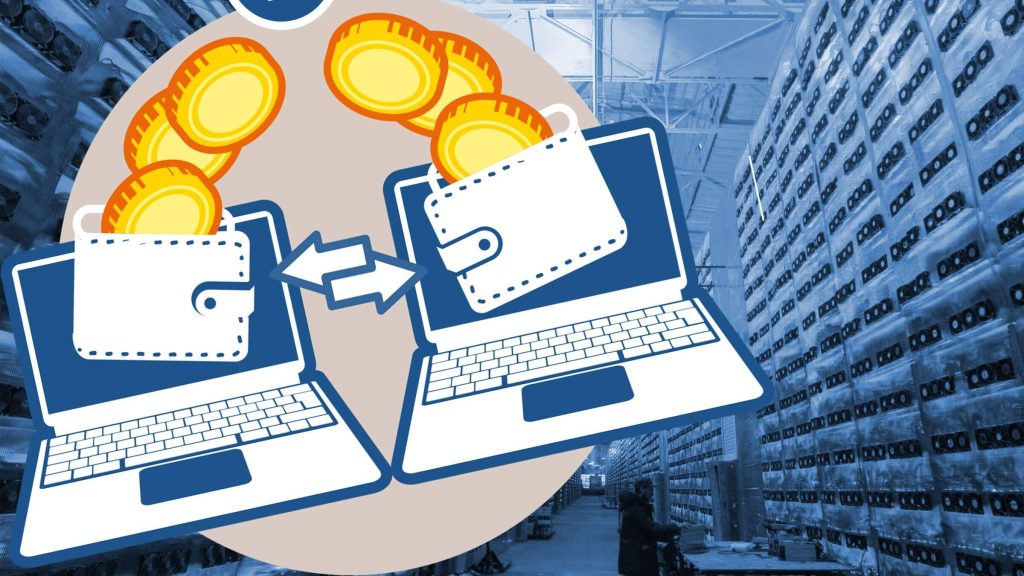
The finance industry has continuously been facing many challenges for a very long time. The incredible advancements in blockchain technology can solve numerous issues that the sector faces regularly. There are many fintech solutions available today, but nothing offers solutions like blockchain.
The main threats to financial security are related to security and transparency, expensive costs, delayed settlements, potential risks, and auditing. Blockchain helps to solve all of the problems at one platform making it easy for finance experts to deal with their daily operations. To understand how blockchain can be used in business in the financial sector, we can take help from the following use cases.
- Cross Border Payments
- Lending Platforms
- Credit Score
Case 1 # Cross-Border Payments
Traditional banks impose an additional cost for every transaction, supplying goods or payments across borders, making the process expensive and slow.
Blockchain operates among two peers without the involvement of any third party. Use cases for blockchain in financial services enable individuals to send and receive money with minimal interruptions from different entities like banks and the government.
Case2 # Lending Platforms
Blockchain allows borrowers to directly deal with lenders about the interest rate, installments, and tenor of the transaction with the help of smart contracts.
Borrowers and lenders can bind a trust with the help of smart contracts after agreeing to certain conditions. If borrowers can’t agree to the terms, then the smart contract sums late payment fees amount to the amount to be paid to the lender.
Case 3# Credit Score
Current loan proceedings require candidates to have a valid credit score before applying for any loan application. However, the credit score of one country is not considered valid in another country, leaving the applicants with very few choices. Similarly, lenders face a lack of mobility and trustworthiness when checking the credit scores of applicants.
To solve this issue, blockchain brings transparency to the system and allows lenders to access the immutable records of applicants’ financial transactions to understand the creditworthiness of the applicant.
Along with these three cases, the other use cases for blockchain in financial services that deserve a noticeable mention include invoice management and billing solutions, investment systems, government costs, political funds, stock exchange, and much more.
Blockchain In Logistics: Use Cases
There are so many inefficiencies that blockchain can resolve. The blockchain can resolve most of the issues in the multi-node industry. With the help of blockchain, logistics and transportation businesses can become much more transparent and secure. The transportation industry has some multi-level problems, like the need for tons of documents and complex operations.
The need for documentation slows down the end-to-transportation and brings more inefficiencies to the supply chain. Along with this, the lack of a trustworthy single source to deal with the transaction makes the transaction process even more complex.
Blockchain use cases in logistics can put an end to all the issues. It can provide meaningful solutions to record transactions and create an efficient and transparent system to track the assets and all related and non-related documentation. Here are some use cases to help you find out how blockchain does this.
- Legit way to process documents
- Reducing the risk
- Quality Monitoring
- Use of integrated technology
Case 1 # Legit Way To Process Documents-
Logistics companies have to abide by a set of rules and regulations while handling transportation. On top of that, international transportation has its rules for processing accounting processes and documentation.
The use cases of blockchain in supply chain can add multiple consignments going in and out. It provides a secure ledger for the information and stores documents. This enables companies to view the status of transportation and related data in real-time.
Case 2 # Reducing The Risk
Blockchain can help companies to record all transaction data. It also allows regular history and invoice management of the product. This further permits users to track the product’s delivery journey. As transportation with the blockchain becomes safe, the risk of any fraudulent activities within the supply chain is reduced.
Case 3# Quality Monitoring
Out of all the products that are delivered daily, certain products need extra supervision, such as fragile and perishable products. Blockchain maintains a record of these types of products by handling all the processes. It records the information of every delivery phase of the product and helps in case there is an issue. Companies can use blockchain as a business case study to see how products are monitored at every delivery stage.
Case 4# Use of Integrated Technology-
Raging technology in AI and IoT has helped the logistics industry to evolve. Because of these types of collaborations, robots, and sensors can now fully manage storage and carriers. And it happens without any human intervention.
With the help of these technologies, blockchain use cases in the retail industry improve the whole transportation. It also adds more efficiency and transparency by creating smart contracts with AI robots and sensors.
Blockchain In Energy Industry: Use cases
Just like other major industries, the energy sector faces inefficiencies despite being catalyzed by advanced technologies. After the improvement made by electric meters and solar technology, inefficiencies are still rampant in this field. Most of the issues happen because of the lack of transparency and the heavy load of maintaining the documentation.
It, therefore, becomes important for blockchain experts to participate in the energy sector and make a possible work model to sort out these issues. The complex day-to-day tasks in the sector can be managed with the blockchain. Blockchain offers a distributed ledger to handle the day-to-day tasks and manage the blockchain. With that said, let’s look at the possible blockchain use cases in energy industry.
- End-to-end encrypted energy trading.
- Easy access to renewable energy
- Easy settlements
- Microgrid systems
Case 1 # End To End Encrypted Energy Trading-
With end-to-end encrypted energy trading, consumers are authorized to buy and sell excess energy. But they can buy and sell the energy within their community. A group of familiar and authorized renewable energy asset owners can sell and buy surplus energy with neighbors. By trading the energy, they can get certain cost optimization benefits. At this point, there are a few blockchain-based energy trading platforms to facilitate the trading of excessive energy. But the future will witness more of them.
Case # 2 Easy Access To Renewable Energy.
By using the cryptographic digital ledger’s ability to conduct safe and immutable transactions, energy providers can eliminate the danger of fraud. The blockchain can automatically and quickly trace and validate REC transactions.
Energy providers can also avoid the risks of selling energy credits multiple times because the blockchain will flag duplicate transactions as incorrect. Its digital ledger gives cryptographic security to the records, ensuring that no one can tamper with them and that providers have confidence in the energy’s provenance. This also gives energy providers sustainable access to renewable energy.
Case # 3 Easy Settlements
The blockchain allows for the automatic settlement of transactions. It records all exchanges on each node, making it immutable and safe. Because blockchain enables smart contracts, energy suppliers can also join in the end-to-end encrypted energy trading. Furthermore, because there are no intermediaries or brokers, the energy providers and consumers can trade directly, resulting in a more cost-effective and rationalized method.
Smart contracts benefit not only from the automated settlement of financial trades but also from real-world trades.
Case #4 Microgrid Systems
The microgrid is another intriguing application of blockchain technology. Blockchain technology’s decentralized nature allows users to handle complex transactions without the involvement of any third party. Moreover, by avoiding the need for costly network upgrades, blockchain technology reduces costs and mitigates transmission losses.
Microgrids will aid in resourceful energy management with the help of distributed electricity generation. It will also assure supply stability and provide reliable backup power in the event of a power outage.
These business blockchain studies are improving sectors, including sustainable and renewable energy, oil, and gas, for automatic triggering settlements and tamper-proof, secure transactions. Apart from these 4 case studies, the blockchain is also being used for smart meters and climate finance.
Conclusion-
The conclusion leads us to the end of use cases of the blockchain, which has a pile of possibilities for every industry. We have discussed the four: automotive, finance, logistics, and energy. Blockchain has a wide range of practical use cases for other industries, too. Each of these fields has seen diverse possibilities for growth because of the two attributes: transparency and decentralization. Blockchain stands for the ability to change the world. Definitely, with all these changes, the future will be far different than we can imagine. If you want to be in the blockchain ecosystem and find out how blockchain can be used in business, , it is a great time to start with.
Blockchain creates secure and tamper-proof records of vehicle history and ownership transfers, enhancing trust and reducing fraud.
Blockchain ensures real-time tracking and authentication of parts, improving transparency, reducing counterfeit risks, and streamlining operations.
Yes, blockchain facilitates secure data sharing between autonomous vehicles, improving safety and decision-making and protecting data integrity.
Smart contracts automate leasing agreements and insurance claims, reducing paperwork, ensuring faster processing, and eliminating fraud risks.



 6 Tips for Getting Started With CNC Milling Machine Programming