







In today’s fast-paced verification environment, scannable IDs have become a critical tool for businesses that require quick, reliable, and seamless identity validation. From bars and nightclubs to financial services and online verification systems, high-quality scannable IDs provide a frictionless experience while maintaining operational efficiency.
We focus exclusively on non-NFC and non-RFID scannable IDs, designed with precision encoding and advanced barcode technologies that replicate real-world scanning behavior. These IDs are engineered to work with widely used scanners, making them the preferred choice for businesses and professionals who prioritize accuracy, speed, and compatibility.
What Are Scannable IDs?
Scannable IDs are identification cards embedded with machine-readable elements, such as PDF417 barcodes, QR codes, or magnetic stripe data, that can be scanned by devices to instantly retrieve stored information.
Unlike outdated manual verification processes, these IDs enable:
- Instant data extraction
- Reduced human error
- Enhanced operational speed
- Improved customer experience
The most common format used in modern scannable IDs is the PDF417 barcode, which stores detailed encoded data in a compact, scannable format.
Key Features of High-Quality Scannable IDs
1. Advanced Barcode Encoding
Premium scannable IDs utilize accurate PDF417 encoding that mirrors real-world government-issued formats. This ensures compatibility with commercial scanners used in bars, retail stores, and verification systems.
2. Precision Printing Technology
The quality of printing directly impacts scan success. High-end IDs feature:
- High-resolution printing (300+ DPI)
- Sharp barcode clarity
- Accurate color matching
These elements ensure the ID scans consistently across multiple devices.
3. Durable Materials
Top-tier IDs are produced using PVC or composite materials, providing:
- Water resistance
- Scratch resistance
- Long-term durability
This ensures the barcode remains readable over time.
4. Magnetic Stripe Functionality
Many scannable IDs include a magnetic stripe that stores encoded data, allowing compatibility with older scanning systems still used in various industries.
5. Realistic Layout and Design
High-quality scannable IDs replicate the visual structure of official IDs, including:
- Font alignment
- Data positioning
- Barcode placement
This enhances scanner recognition and usability.
Types of Scannable IDs
1. PDF417 Barcode IDs
The most widely used format, ideal for:
- Bars and clubs
- Age verification systems
- Retail environments
2. QR Code-Based IDs
Used in digital verification systems, offering:
- Fast scanning via smartphones
- Flexible data storage
3. Magnetic Stripe IDs
Best suited for:
- Legacy systems
- Swipe-based verification setups
4. Hybrid Scannable IDs
These combine barcode + magnetic stripe, ensuring maximum compatibility across different scanning devices.
How Scannable IDs Work
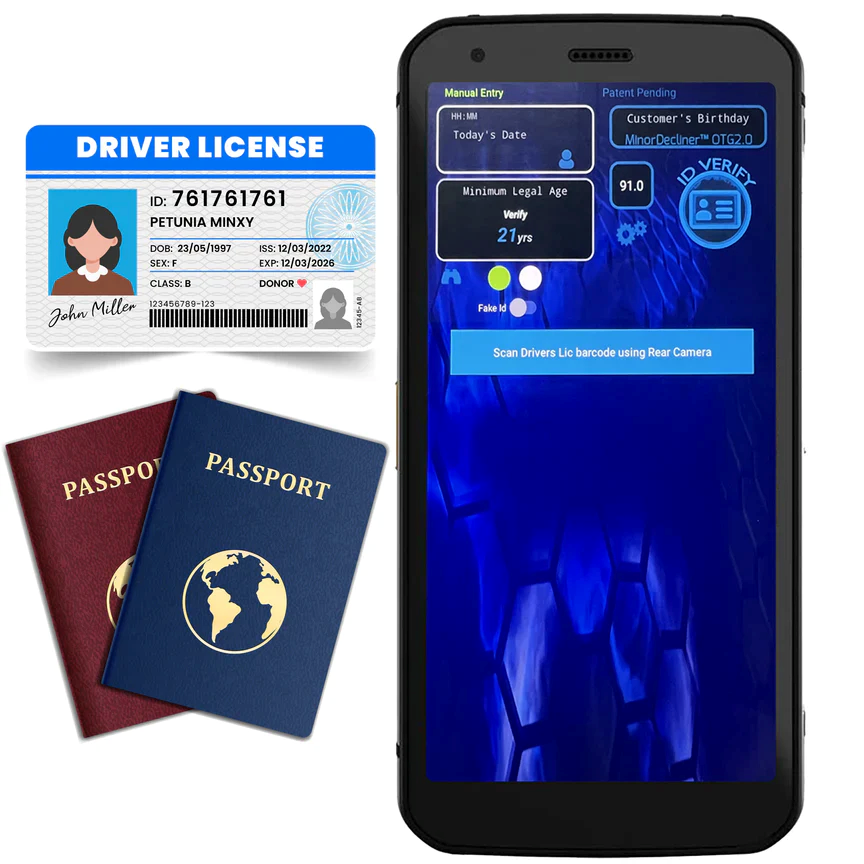
Scannable IDs operate through encoded data systems embedded within the barcode or stripe. When scanned:
- The scanner reads the code.
- Data is decoded instantly.
- Information is displayed on the system.
This process takes less than a second, making it ideal for high-volume environments.
Industries That Use Scannable IDs
Bars and Nightclubs
Quick age verification is essential. Scannable IDs allow staff to verify customers instantly, reducing wait times and improving security.
Retail and POS Systems
Retailers use scannable IDs for identity checks, loyalty programs, and secure transactions.
Financial Services
Banks and fintech companies rely on scannable IDs for customer onboarding and identity validation.
Event Management
Events use scannable IDs for:
- Entry management
- Ticket validation
- Access control
Benefits of Using Scannable IDs
1. Speed and Efficiency
Manual checks are slow. Scannable IDs enable instant verification, improving workflow.
2. Accuracy
Automated scanning eliminates human errors, ensuring reliable data retrieval.
3. Enhanced Security
Encoded data reduces the risk of tampering and inconsistencies.
4. Cost-Effective Operations
Businesses save time and resources by adopting automated verification systems.
How to Choose the Best Scannable IDs
1. Compatibility with Scanners
Ensure the ID works with common scanning devices used in your industry.
2. Barcode Quality
Look for:
- Crisp, high-density barcodes
- Proper encoding standards
3. Material Durability
Choose IDs made from premium PVC for long-term use.
4. Customization Options
High-quality providers offer:
- Custom data encoding
- Design flexibility
- Bulk production
5. Vendor Reliability
Work with suppliers who specialize in accurate scannable ID production.
Common Mistakes to Avoid
- Choosing low-resolution printing, leading to scan failures
- Ignoring barcode encoding standards
- Using cheap materials that degrade quickly
- Not testing compatibility with scanners
Avoiding these mistakes ensures consistent performance and reliability.
Future Trends in Scannable IDs
The future of scannable IDs is driven by innovation, security, and seamless integration. Here’s what we anticipate:
1. AI-Powered Verification Systems
Advanced systems will use AI algorithms to cross-check scanned data instantly, improving accuracy and fraud detection.
2. Cloud-Based Data Integration
Scannable IDs will connect directly to cloud databases, enabling real-time data updates and centralized verification.
3. Enhanced Barcode Technologies
Next-generation barcodes will store larger datasets, improving functionality without increasing size.
4. Mobile Scanner Optimization
With the rise of smartphones, scannable IDs will be optimized for mobile-based scanning apps, expanding usability.
5. Advanced Security Encoding
Future IDs will include multi-layered encoding techniques, making duplication extremely difficult.
Why High-Quality Scannable IDs Matter
In high-demand environments, reliability is everything. Poor-quality IDs lead to:
- Scan failures
- Delays
- Operational inefficiencies
We ensure that premium scannable IDs deliver flawless performance, allowing businesses to maintain speed, accuracy, and professionalism.
FAQs
1. What is a scannable ID?
A scannable ID is an identification card with machine-readable elements such as PDF417 barcodes, QR codes, or magnetic stripes that can be scanned to instantly verify identity or access information.
2. Are scannable IDs the same as RFID or NFC IDs?
No. Scannable IDs are not NFC or RFID-based. They rely on barcodes and magnetic stripes rather than wireless communication, making them compatible with standard scanners.
3. What industries use scannable IDs?
Scannable IDs are widely used in:
- Bars and nightclubs for age verification
- Retail stores for POS identity checks
- Banks and fintech for customer onboarding
- Event management for ticket and access control
4. What makes a high-quality scannable ID?
Key features include:
- Accurate barcode encoding (PDF417, QR, magnetic stripe)
- High-resolution printing for scan reliability
- Durable materials like PVC
- Realistic layout matching official ID formats
5. Can scannable IDs be scanned with a smartphone?
Yes. QR code-based scannable IDs can be scanned with smartphones, while PDF417 and magnetic stripe IDs require compatible scanners.
6. How durable are scannable IDs?
Premium scannable IDs are made with PVC or composite materials, making them waterproof, scratch-resistant, and long-lasting.
7. Can scannable IDs store personal information?
Yes. They can securely store data such as:
Name and date of birth
ID numbers
Expiration dates
Additional encoded details for verification systems
8. How do I choose the right scannable ID for my business?
Consider:
Compatibility with your existing scanners
Barcode quality and printing resolution
Material durability
Customization options for data encoding
Vendor reliability and experience
9. What are the future trends for scannable IDs?
Emerging trends include:
AI-powered verification systems for instant data cross-check
Cloud-based integration for real-time updates
Advanced barcode technologies storing more data
Mobile scanner optimization for smartphones
Enhanced security encoding to prevent duplication
10. Are scannable IDs secure?
Yes. With multi-layered encoding and accurate production standards, scannable IDs provide reliable, tamper-resistant verification, reducing the risk of fraud.
Conclusion
Scannable IDs are no longer optional—they are essential for modern verification systems. By choosing high-quality, properly encoded, and durable IDs, businesses can streamline operations, improve accuracy, and deliver a superior user experience.
We emphasize precision, compatibility, and reliability, ensuring every scan works exactly as intended. Investing in the right scannable IDs today sets the foundation for efficient and scalable verification systems tomorrow.


 How to Run Payroll Across Multiple Countries Efficiently