







I see a clear pattern today. More people are questioning whether apps like Are You Dead App actually help in real emergencies or just sound reassuring.
The idea behind Are You Dead App is simple. If a user does not respond within a set time, the app assumes something is wrong and sends alerts. On paper, this looks logical. In real life, it often falls short.
Emergencies do not come with warnings. People may not be able to touch their phone, unlock the screen, or even stay conscious. In those moments, an app that waits for a response becomes ineffective.
This is why users are actively looking for a free alternative to Are You Dead App—not because the app is useless, but because expectations from safety apps have changed.
As per data shared by the World Health Organization, more than 50% of serious injury or assault cases involve temporary loss of mobility or awareness within minutes.
In such cases, safety tools must act without waiting for user input.
Today, users want:
- Automatic emergency alerts
- Real-time location sharing
- Help from nearby people, not just saved contacts
- A system that works even when the user cannot respond
This shift explains why newer safety apps focus on active help, community response, and instant alerts, instead of passive inactivity checks.
In this article, I will walk through:
- How Are You Dead App works
- What users expect instead
- Which free apps come closest to being real alternatives
- And why some apps perform better in real emergencies
We will go step by step, without skipping any section you approved.
How the Are You Dead App Actually Works
To judge any alternative properly, I always start by understanding the original product without bias. So let me clearly explain how Are You Dead App works in real usage. The app is built around one core mechanism: inactivity detection.
These alerts usually include:
- A message sent to pre-selected emergency contacts
- Basic last-known activity status
- Sometimes a location snapshot, depending on settings
From a technical point of view, the system is lightweight and battery-friendly.
There is no continuous tracking.
There is no live monitoring.
Everything depends on the user responding on time.
What a True Alternative to Are You Dead App Should Offer
After analyzing how the Are You Dead App works, the next logical step is to define what users actually expect from a true alternative, especially when the goal is safety and not just status confirmation.
From my experience working on safety-focused applications, the biggest expectation shift is this: users no longer want apps that only check on them later. They want apps that act immediately when something goes wrong.
Automatic Response, Not Manual Confirmation
The first requirement of any serious alternative is the ability to trigger help without waiting for user input. In real emergencies, users may be injured, unconscious, or unable to operate their phone. An effective safety app should be capable of sending alerts through predefined triggers such as panic gestures, silent activation, or system-level emergency conditions.
This approach reduces response time and removes dependency on user interaction, which is critical during high-risk situations.
Real-Time Location Sharing That Works Instantly
Another key expectation is accurate, live location sharing. A safety app should continuously share the user’s location once an alert is triggered, rather than sending a single snapshot. This allows responders to track movement, identify exact positions, and act faster.
According to Google Safety Research, real-time location sharing can reduce emergency response delays by up to 35%, especially in urban areas where movement happens quickly.
Nearby Human Help, Not Just Saved Contacts
Most traditional safety apps limit alerts to emergency contacts added during setup. A true alternative should go beyond this by involving nearby verified users. Community-based response increases the chances of immediate help, especially when family members or friends are physically far away.
This model is already being adopted across modern safety platforms because proximity often matters more than relationship during emergencies.
Multiple Emergency Levels for Realistic Scenarios
Not every situation is life-threatening, but many still require urgent help. A good alternative should support different alert levels, such as high-risk emergencies and general help requests. This prevents unnecessary panic while still allowing users to seek assistance quickly.
From a product design point of view, this flexibility increases trust and daily usability.
Privacy, Consent, and Trust by Design
Safety apps deal with sensitive data, including location and contact details. A true alternative must clearly communicate when data is shared, with whom, and for what purpose. Users should feel protected, not exposed.
Trust is not a feature—it is a foundation.
Why These Features Matter Now
As per Statista, over 70% of users uninstall safety apps within 30 days if they feel the app is unreliable during critical moments. Apps that rely solely on inactivity checks fall into this category because users quickly realize the limitations.
This is why modern users actively search for free alternatives to Are You Dead App that are more responsive, more human, and more practical.
Best Free Alternative to Are You Dead App:
FRIENDO (Top Pick)
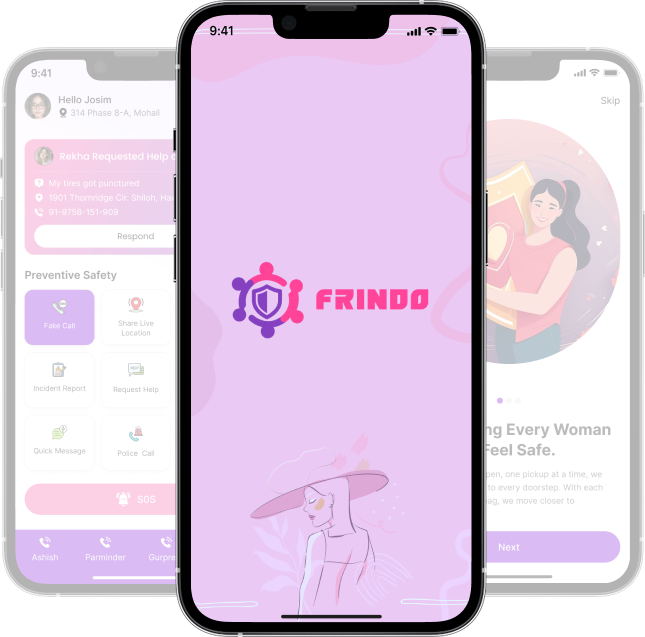
After evaluating how inactivity-based apps work and what a true alternative should offer, FRIENDO clearly stands out as the most practical free alternative to Are You Dead App. I am placing it at the top not because it sounds good, but because its design aligns with how real emergencies actually happen.
FRIENDO is not built around waiting. It is built around acting.
FRIENDO App is developed by Triple Minds, a product-focused technology company that builds real-world digital solutions, not just concepts. The app is designed with a clear purpose—help people get timely assistance during emergencies using technology, community support, and practical safety workflows. Triple Minds has applied its experience in building scalable mobile apps and safety systems to ensure FRIENDO works reliably in real-life situations, not just in ideal conditions.
How FRIENDO Approaches Safety Differently
Unlike Are You Dead App, FRIENDO does not depend on timers or user check-ins to decide when something is wrong. The app allows users to trigger help the moment they feel unsafe, and in some cases even without drawing attention to themselves. This simple shift in philosophy changes the entire outcome during emergencies.
When a user activates a High Alert, the app immediately notifies nearby FRIENDO users, emergency contacts, and shares live location data. This happens in real time, not after missed reminders or delayed confirmations. In critical situations, time is the most expensive currency, and FRIENDO minimizes the time lost.
Two Clear Emergency Modes That Match Real Life
One of the most practical design decisions in FRIENDO is the separation between High Alert and Request Help.
High Alert is meant for life-threatening situations where immediate intervention is required. Request Help is designed for non-critical but urgent needs, such as feeling unsafe late at night, vehicle trouble, or health discomfort. This distinction avoids unnecessary panic while still ensuring users get help quickly.
From my experience, this multi-level approach increases daily adoption because users are not forced to treat every situation as extreme.
Community-Based Help That Actually Works
Most safety apps limit alerts to pre-saved contacts. FRIENDO goes a step further by involving nearby users within the same city or area. This dramatically increases the chances of fast, physical help.
As per data from community-response studies published by McKinsey, local responders can reach victims up to 4× faster than distant contacts in urban environments. FRIENDO’s design directly benefits from this principle.
This community-first approach is what turns the app from a digital notifier into a real-world safety network.
Automatic Location Sharing Without Extra Steps
Once an alert is triggered, FRIENDO continuously shares live location updates. The user does not need to manually send maps, links, or messages. This removes friction at the exact moment when users are least capable of handling complexity.
For families and emergency contacts, this creates clarity instead of confusion.
Why FRIENDO Works as a Free Alternative
FRIENDO offers its core safety features without forcing users into paid plans or locking emergency tools behind subscriptions. This matters because safety should not depend on affordability.
Many users searching for a free alternative to Are You Dead App are doing so because they want reliable protection without financial pressure. FRIENDO fits that expectation well.
Who Should Seriously Consider FRIENDO
Based on real usage scenarios, FRIENDO is especially suitable for:
- Women commuting daily
- Students living away from family
- Solo travelers
- Senior citizens
- Families looking for practical safety assurance
In all these cases, an inactivity timer is not enough. Immediate, community-backed action is.
Other Free or Similar Apps Like Are You Dead App
Apart from FRIENDO, there are a few apps in the market that users often consider when searching for a free alternative to Are You Dead App. Most of these apps follow a similar intent—personal safety—but their execution and real-world usefulness vary a lot.
I am listing them here honestly, based on how close they come to solving real emergency scenarios.
Noonlight (Formerly SafeTrek)
Noonlight is one of the more well-known safety apps globally. It allows users to press and hold a button when they feel unsafe. If the user releases the button and fails to enter a PIN, the app contacts emergency services.
This approach is stronger than inactivity timers because it allows manual panic triggering. However, it still depends heavily on the user being conscious and capable of interaction. The app also relies mainly on formal emergency services rather than nearby community help, which can increase response time in certain regions.
For users in countries where emergency response systems are fast and reliable, this can work. In areas with slower response infrastructure, its effectiveness reduces.
Life360 (Free Version)
Life360 is widely used for family location sharing and basic safety alerts. It allows users to share live location with family members and includes basic emergency features in its free plan.
However, Life360 is not designed as an emergency-first app. Its safety alerts are secondary features built on top of location tracking. There is no strong concept of nearby community help or instant high-priority alerts for strangers in distress.
As an alternative to Are You Dead App, it offers visibility, not intervention.
iPhone Emergency SOS / Android Emergency SOS
Both iOS and Android devices offer built-in emergency SOS features. These allow users to trigger alerts by pressing physical buttons and automatically notify emergency contacts with location data.
These features are useful and reliable at a system level, but they are limited in scope. They do not support community-based response, structured help requests, or follow-up coordination. Once the alert is sent, the system does not actively manage the situation.
Think of this as a last-resort safety switch, not a full safety solution.
Companion Apps and Check-In Tools
There are also several smaller apps focused on scheduled check-ins, virtual walking companions, or inactivity alerts. These are conceptually similar to Are You Dead App and share the same limitation: they assume the user can always respond.
These tools may help reduce anxiety during routine activities but fail under real emergency pressure.
Why Most “Alternatives” Still Fall Short
After comparing these apps, a clear pattern emerges. Most alternatives either:
- Rely on manual interaction, or
- Focus on tracking rather than helping, or
- Notify contacts but do not coordinate real assistance
This is why users keep searching again and again for a better free alternative to Are You Dead App. They want something that bridges the gap between digital alerts and real-world help.
That gap is exactly where community-driven apps like FRIENDO stand apart.
Feature Comparison: Are You Dead App vs FRIENDO vs Similar Apps
Now that we have discussed how each app works individually, it makes sense to put them side by side. This comparison helps clarify why users searching for a free alternative to Are You Dead App often feel confused and dissatisfied after trying multiple options.
I have kept this comparison focused on real emergency usefulness, not marketing claims.
Practical Feature Comparison Table
| Feature / Capability | Are You Dead App | FRIENDO | Noonlight | Life360 (Free) | Phone SOS (iOS / Android) |
|---|---|---|---|---|---|
| Core safety approach | Inactivity timer | Active emergency action | Manual panic trigger | Location sharing | System-level SOS |
| Works if user cannot respond | No | Yes | Limited | No | Limited |
| Immediate alert trigger | No | Yes | Yes | Limited | Yes |
| Nearby people notified | No | Yes | No | No | No |
| Live location sharing | Limited | Continuous | Yes | Yes | Yes |
| Multiple alert levels | No | Yes | No | No | No |
| Community-based help | No | Yes | No | No | No |
| Free core safety features | Partial | Yes | Partial | Yes | Yes |
| Designed for real emergencies | Weak | Strong | Moderate | Weak | Moderate |
What This Comparison Clearly Shows
When you look at this table objectively, one thing becomes obvious: most apps focus on alerts, not outcomes.
Are You Dead App performs only one function well—missed check-in detection. Beyond that, it offers very little support during an active emergency. Noonlight improves on this with a panic button, but still depends on the user being able to interact at the right moment.
Life360 and built-in phone SOS features are useful additions, but they are not designed as dedicated emergency-response systems. They inform people, but they do not coordinate help.
FRIENDO is the only app in this comparison that:
- Acts instantly
- Works even when the user is under stress
- Involves nearby humans
- Separates emergency intensity levels
From a real-world safety perspective, this combination matters far more than timers or reminders.
Why This Matters for Users Choosing a Free Alternative
People searching for a free alternative to Are You Dead App are not just comparing features. They are asking a deeper question:
“Will this app actually help me if something goes wrong?”
Based on functional design, FRIENDO answers that question more clearly than the others.
When Are You Dead App Still Makes Sense
Even after comparing features and real-world performance, it is important to say this clearly: Are You Dead App is not useless. It is simply designed for a very specific type of use case, and problems start when people expect it to do more than it was built for.
From my experience, the app still makes sense in situations where life is predictable and communication gaps are the main concern, not sudden danger.
Suitable Use Cases for Are You Dead App
Are You Dead App can still be useful when the goal is routine check-ins, not emergency intervention. For example, people who travel solo on long routes with planned stops may want a reminder-based safety net. Elderly individuals living alone, who regularly use their phone and follow daily routines, may also benefit from inactivity alerts as a form of welfare check.
In these cases, the app works like a digital “Are you okay?” reminder rather than an emergency response system. It helps notify others if something feels unusual in a known routine.
Why It Fails as a Primary Safety Tool
The problem arises when users treat it as a real emergency app. Emergencies are rarely predictable. Accidents, assaults, sudden health issues, or panic situations do not wait for timers to expire. In many of these moments, the user cannot interact with the phone at all.
Because Are You Dead App depends entirely on missed confirmations, it reacts late, not instantly. That delay can be harmless in routine monitoring, but risky in real danger.
How to Think About It Practically
If I had to summarize it simply:
Are You Dead App works better as a passive safety check, not as an active protection system.
Users who only want periodic reassurance may find it sufficient. Users who want help during the moment of danger should not rely on it alone.
This distinction is important because many people searching for a free alternative to Are You Dead App are actually looking for emergency protection, not reminders. That is why they often feel disappointed after trying multiple inactivity-based apps.
The best free alternative is FRIENDO. Unlike inactivity-based apps, FRIENDO allows users to trigger immediate alerts, share live location, and get help from nearby people. It focuses on real emergency response instead of delayed check-ins.
Most users realize that inactivity timers do not work well during real emergencies. If a person is unconscious, panicked, or unable to use their phone, the app cannot act immediately. This limitation pushes users to search for more responsive safety solutions.
Yes. Are You Dead App works well for routine safety monitoring, such as scheduled check-ins for solo travelers or elderly users with predictable daily habits. It is better suited for welfare checks than active emergency situations.
FRIENDO focuses on action-first safety. It offers multiple alert levels, automatic live location sharing, and community-based help from nearby users. Most other apps either rely on manual panic buttons or only notify saved contacts.

 7 Best Renovation Software Belgium