







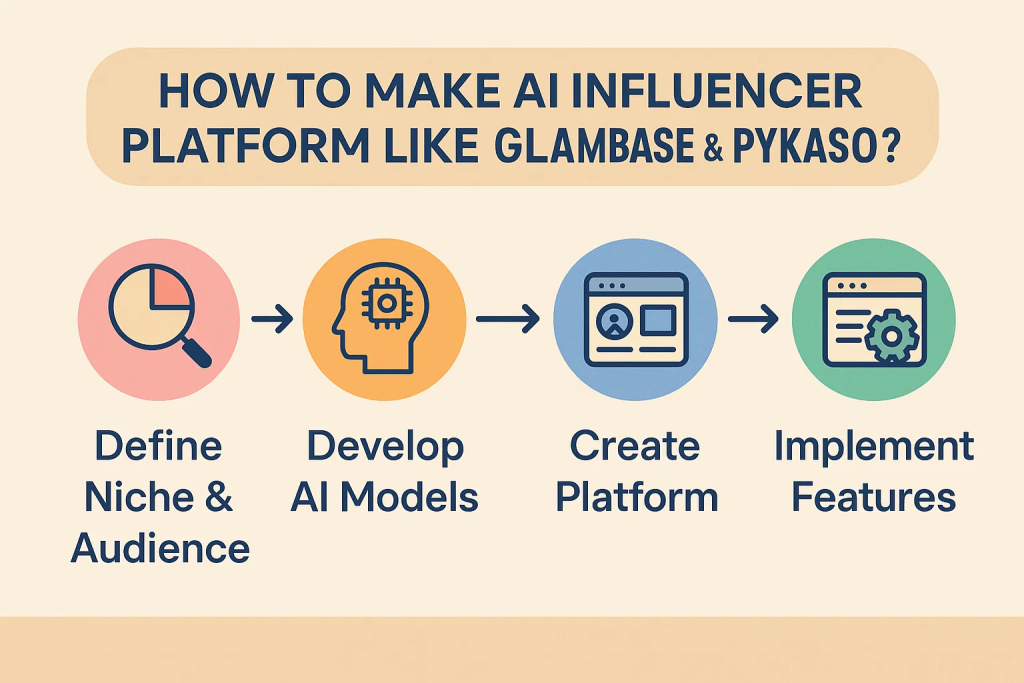
The rise of AI influencer platforms represents a new frontier in digital marketing, blending virtual characters with traditional influencer marketing. Such platforms enable users to create and customize AI-driven virtual influencers and also manage real human influencers. For example, Glambase describes itself as “an innovative AI Influencer Creation Platform” where users can launch custom virtual personalities to “engage and monetize audiences through personalized interactions.” as per reported by navto.ai.
Similarly, Pykaso offers “all-in-one generative AI tools” that let creators “generate realistic AI content in seconds for your own AI characters”pykaso.ai. Together, these platforms provide tools for designing AI personas, generating media (images, videos, text), and linking them to monetization channels. The overall purpose is to give brands and creators a unified platform for influencer marketing: real influencers can manage campaigns and analytics, while AI personas can be generated, trained, and deployed as 24/7 brand ambassadors. This dual approach offers unique value: AI influencers give brands consistency, global reach, and precise brand alignment (influencity.com), while human influencers bring authenticity and existing follower trust.
Core Features and Functionality like Platform Like Glambase & Pykaso
An AI influencer platform must support two main user types – virtual (AI-generated) influencers and real human influencers – plus brand partners. Core features include:
- Influencer and Brand Profile Creation: Influencers (real or virtual) can create detailed profiles with bios, interests, social stats, and media galleries. Brands can create profiles with campaign briefs and budgets. The platform should allow easy registration and profile management.
- AI Character Generation: For virtual influencers, tools to generate and customize AI personas are key. This includes selecting appearance (gender, age, style), personality traits, and voice. Users should be able to create AI-generated images and videos on demand, for example by integrating image-generation models (e.g. Stable Diffusion) and video-generation APIs. Platforms like Creatify emphasize “text prompts [to] generate ultra-realistic AI influencers” and allow style customization. AI personas may use generative models (GANs, diffusion) for lifelike visuals and LLMs (ChatGPT, LLaMA) for conversational abilities.
- Content Creation Tools: Beyond generating avatar appearances, the platform should include content tools: text-to-image, image-to-image, text-to-video, and face/voice swap features. For example, Pykaso provides a suite (face swap, AI image/video generation, upscaler) to produce consistent content for an AI influencer. These tools let the influencer (or their manager) rapidly produce social posts, stories, and promotional material.
- Content Scheduling and Publishing: A built-in scheduler helps plan posts across social media channels. Influencers can queue generated or user-created content, with options for automatic posting. For human influencers, integration with Instagram, TikTok, YouTube APIs can automate publishing. This ensures a steady stream of content and avoids duplicate effort.
- Brand Collaboration Tools: The platform should provide a marketplace or matchmaking system where brands post campaign briefs and influencers (AI or real) can bid or be invited. Features include negotiating terms, contract templates, and an integrated CRM. Advanced platforms integrate a full Influencer Relationship Management (IRM) system to track negotiations and collaborations. For example, Upwork-listed specs for influencer apps include “Brand Partnerships and Sponsorship Management” as a core feature.
- Audience Targeting & Discovery: Brands need search and filtering tools to find suitable influencers. Advanced search filters (demographics, interests, engagement rates) and AI-driven recommendations help match brands with ideal influencers. An expansive influencer database is essential so brands can explore micro-influencers to celebrities. The platform can use data (follower demographics, past campaign success) to suggest optimal matches.
- Performance Analytics: Robust analytics and reporting are critical. Influencers and brands should see metrics like reach, impressions, likes/comments, conversion rates, and ROI. Dashboards visualize campaign performance and audience engagement. These insights help users optimize content strategy and prove campaign value. As one case study notes, “influencer analytics capabilities…allow brands to access detailed insights into the performance of their campaigns at every stage” (influencermarketinghub.com).
- Monetization & ROI Tools: The platform should help influencers and brands measure revenue impact. This includes affiliate link tracking, coupon usage, or sales lift analytics. It might also support micropayments or fan interactions (tips, paid messaging) for influencers.
Together, these features form an end-to-end workflow: influencer recruitment and onboarding, content planning and production, collaboration with brands, publishing, and analytics. By integrating creative AI tools with marketing management features, the platform serves as a one-stop solution for virtual and human influencer campaigns.
Working Model: Platform Operations
From a high-level view, the platform operates as a multi-sided ecosystem:
- Influencers (Real and AI) Side: Influencers register or create accounts. Real influencers may link their social accounts and verify identity. AI influencers are “created” via the platform’s character generation tools. Each influencer (virtual or real) has a profile in the platform’s directory. Influencers submit their content calendar and set availability for campaigns. They can browse brand briefs or receive offers. Once engaged, an influencer posts content (generated or self-created) and reports back via the platform’s analytics. Revenues (paid posts, affiliate fees) are tracked and processed through the system.
- Brands Side: Brands or marketers sign up and outline campaign goals (target audience, product, budget). They use the platform’s search and filters to discover influencers whose audience matches their target demographics. Brands can invite candidates or wait for influencers to apply. The platform provides messaging and negotiation tools. Upon agreement, the campaign’s deliverables and timeline are set. As the campaign runs, brands monitor real-time performance dashboards (engagement stats, conversions). The platform may also integrate ad spend management (promoting posts) and attribution (tracking sales from influencer links).
- AI Content Engine: Behind the scenes, the platform’s AI engine generates or augments influencer content. For a virtual influencer, a user might input a prompt or script, and the system produces a realistic image or video. The system can also auto-generate captions or responses. Advanced platforms might allow AI chatbots or virtual assistants for the influencer to engage with fans 24/7. In essence, the platform’s AI backend acts as the “creative studio” for virtual influencers, while the brand side treats each AI persona like any other creator.
- Revenue Flow: Influencers (real or virtual) earn via brand deals, affiliate links, subscription revenue, etc. The platform may facilitate payments: e.g. disbursing fees after content delivery. It may take a commission or charge subscription fees to brands/influencers for premium features.
- Administration: Administrators oversee all operations. The platform architecture typically runs on cloud servers with a web portal or mobile app. Services include user databases (for profiles, posts), a content delivery network for media assets, and AI/ML servers for content generation. Security and compliance (user data protection, content filtering) are built in. Admins configure system policies (e.g. what content is allowed) and monitor usage.
This working model ensures a seamless experience: influencers can focus on creative output and audience building, while brands focus on strategy and ROI, and the platform automates the connections between them.
User and Admin Workflows
Influencer Workflow (Real and AI)
- Registration and Profile Setup: Influencers sign up, verify identity (especially human influencers), and fill in profile details (bio, niche, demographics). AI influencers are created by specifying attributes (age, style, interests) and generating an avatar image/video.
- Portfolio and Content: They upload previous work or let the AI engine produce sample content (posts, images, videos). AI influencers use the platform’s generative tools to build a content library.
- Campaign Discovery: Influencers browse brand campaigns or activate notifications. They review briefs and apply to suitable campaigns via the platform. They can also signal interest to brands in the built-in marketplace.
- Collaboration: Upon matching with a brand, they negotiate deliverables (post count, deadlines) through the platform’s messaging interface. Contracts and payments are managed in-system.
- Content Creation: The influencer creates or generates the agreed content. AI personas may use text prompts and model settings to produce images/videos. Real influencers draft content and schedule posting, possibly using the scheduler feature.
- Approval and Publishing: Content often goes through an approval step (brand checks and approves posts). Then posts are scheduled or auto-published to social channels via API integration.
- Engagement: Influencers engage with audience comments. AI influencers can be enabled to respond automatically (e.g. chatbot) or notify the user when human input is needed.
- Analytics: After posting, the platform tracks metrics (views, likes, conversions). Influencers can view their performance dashboard to learn what content works and report statistics to brands.
- Payment: Once campaign goals are met, influencers receive payment through the platform’s payment system. They can track earnings and withdraw to their account.
Brand Workflow
- Account Setup: Brands register and complete profile (company info, industry, campaign objectives).
- Campaign Brief Creation: Brands create a campaign listing with details: target audience, platform, budget, deliverables, timeline. They specify if they accept AI influencers, real influencers, or both.
- Influencer Search & Discovery: The platform provides search filters (follower count, interests, location, engagement) and recommendations. Brands select a pool of influencers to invite or make public a marketplace listing.
- Selection and Negotiation: Brands review influencer profiles and media samples. They shortlist candidates and negotiate terms (price per post, content type) via the messaging tool.
- Content Approval: Brands review submitted content drafts and request edits if needed. Approved content is scheduled.
- Campaign Launch: Approved posts go live. Brands may also choose to boost posts via ads or allocate affiliate links.
- Performance Monitoring: Throughout the campaign, brands monitor key metrics (reach, engagement, sales attributed) on the platform’s dashboard. They can compare influencers, optimize budgets, or pivot strategy in real time.
- Report and Payout: After completion, brands receive a summary report. They confirm deliverables (e.g. videos made, posts run) and release payments or subscriptions as agreed. They can leave ratings/reviews on influencer profiles (if the platform supports it) to build trust.
- Repeat and Nurture: Successful pairings may lead to long-term brand-influencer relationships. The platform may recommend repeat collaborations and manage them through CRM-like tools.
Admin Workflow
- User Moderation: Admins review new influencer and brand sign-ups to prevent fraud. For instance, they may verify AI influencers as original creations and ensure real influencers comply with KYC/ID requirements. They can suspend or ban accounts that violate policies.
- Content Moderation: The platform scans user-generated content (posts, images, comments) for prohibited material (hate speech, explicit content). Admins review flags raised by automated filters or user reports. They enforce guidelines by approving or removing content.
- Financial Oversight: Administrators manage the platform’s payment system. This includes setting commission rates, processing payouts to influencers, and ensuring accurate billing for brands. They monitor transactions and resolve payment disputes.
- AI Oversight: Since AI influencers rely on generative models, admins may need specialized tools to review AI outputs for quality and safety. For example, they might enforce that AI-generated avatars do not infringe copyrights or produce offensive imagery. (Future regulations may require explicit labeling of AI content, which admins would oversee.)
- Campaign Approval: On some platforms, admins vet high-profile campaigns or new brand partners. They ensure sponsored content is disclosed properly (FTC compliance) and that influencer collaborations meet brand standards.
- Analytics and Reporting: Admins have dashboards showing overall platform usage: number of active users, transactions, content volumes, etc. They use analytics to spot trends (e.g. which niches are booming) and to detect abuse (e.g. bot accounts).
- System Maintenance: Admins manage the tech infrastructure – scaling servers, updating AI models, integrating APIs (social networks, payment gateways) securely. They perform regular security audits (using “secure coding techniques” and encryption) and keep the platform compliant with data laws.
- Support and Growth: Admins handle customer support tickets (e.g. for login issues, disputes) and implement improvements based on feedback. They also manage platform-wide settings (tax rates, policies) and coordinate marketing efforts to attract new users.
These workflows ensure each user type (influencers, brands, admins) has clear steps to follow. The platform becomes a managed ecosystem where creative, commercial, and operational functions intersect smoothly.
Monetization Models
An AI influencer platform can generate revenue through multiple channels:
- Subscription Fees: Charge brands or agencies monthly fees for platform access. Tiers can offer different features (basic vs. premium analytics, campaign limits). Similarly, advanced features for influencers (e.g. high-end AI model access) could be behind a subscription.
- Commission/Marketplace Fees: The platform can take a percentage of every brand-influencer deal. For example, if a brand pays an influencer $500, the platform might keep 10–20%. This aligns platform success with user success.
- Content & AI Credits: Charge usage-based fees for AI content generation. Pykaso, for instance, uses a “gems” credit system to pay for face swaps and images. This pay-per-use model (or selling “packs” of credits) can monetize heavy content creation.
- Advertising: Allow related ads or sponsorships within the platform. For example, AI tool companies or marketing services might pay to be featured.
- Premium Features: Sell add-ons like advanced analytics reports, API access, or custom avatar creation services. Brands might pay extra for automated campaign optimization using AI.
- Licensing AI Technology: The platform’s proprietary AI (e.g. avatar generation engine) could be licensed to third parties. Others building virtual influencers could pay for API access to the persona engine.
- Training and Consulting: Offer agency-style services. Some users may not want to DIY; the platform could provide managed services (creating influencers, running campaigns) for a premium.
- Partner Integrations: Earn referral fees from integrated services. E.g. if a brand uses a payment gateway or cloud provider via the platform, affiliate revenue could be shared.
By combining recurring subscriptions with transaction-based fees, the platform can build a diversified revenue stream. Importantly, each monetization angle should enhance value: for instance, charging for premium analytics makes sense if brands see measurable ROI.
Technical Architecture
The system architecture should be scalable, modular, and secure. A typical design might include:
- Frontend: A responsive web application (possibly with mobile apps) for all users. This could be built with frameworks like React or Vue.js to create an intuitive UI (dashboards, forms, chat interfaces). It communicates with backend services via REST/GraphQL APIs.
- Backend/Microservices: A service-oriented or microservices architecture would separate concerns: user management, content engine, campaign engine, payment processing, analytics, and AI generation can be distinct services. A node.js (Express) or Python (Django/Flask) server could handle core logic. All business processes (campaign workflows, messaging, scheduling) run here.
- Databases: A combination of databases is likely needed. A relational database (e.g. PostgreSQL) can store structured data: user profiles, campaign details, transactions. A NoSQL store (MongoDB or DynamoDB) can handle flexible data like user-generated content, logs, and AI persona metadata. Real-time data (chat messages, live analytics) might use a fast in-memory DB (Redis).
- AI/ML Layer: This is crucial for virtual influencers. The platform might integrate pre-trained models or custom ones:
- Image/Avatar Generation: Models like Stable Diffusion, DALL·E, or proprietary GANs generate avatars and content. This could run on GPU servers (e.g. AWS EC2 GPU instances, Azure ML) or use APIs (OpenAI, Midjourney, DeepBrain).
- NLP and Chat: Large language models (GPT-4, open-source LLMs) power chatbots or caption generation. These could be hosted or accessed via API.
- Video/Audio Synthesis: If the platform supports AI video avatars, it might use services like Synthesia or custom text-to-video engines.
- The AI layer should be decoupled so models can be updated independently.
- Integration Layers: The system will integrate numerous third-party APIs:
- Social Media APIs: To publish posts and gather analytics, integrate Instagram, TikTok, YouTube, etc. These allow auto-posting and fetching metrics.
- Payment Gateways: Stripe or PayPal APIs handle transactions and payouts. As Aalpha notes, integrating payment gateways and analytics tools is essential.
- Notification/Messaging: Services like Twilio or SendGrid for email/SMS alerts, and perhaps a chat backend (PubNub or Socket.IO) for real-time communications.
- File Storage/CDN: Use cloud storage (AWS S3, Google Cloud Storage) for images/videos, with a CDN for fast delivery globally.
- Analytics and Logging: Dedicated logging/monitoring (ELK stack, Datadog) tracks system health and user analytics. Business analytics might use a warehouse (Snowflake or BigQuery) for complex reporting.
- Security & Compliance: The backend must enforce secure coding, authentication, and encryption. OAuth 2.0 or Auth0 can manage user login. All PII is encrypted at rest. Regular audits ensure compliance with GDPR/CCPA. Admins configure roles/permissions (e.g. who can approve content or export financial reports).
In summary, the architecture is a cloud-native stack: microservices, containerization (Docker/Kubernetes), and AI/ML services, all orchestrated for high availability. This modular design allows for easy updates (e.g. swapping in a better AI model or social API) without overhauling the whole system.
Technology Stack Recommendations
Building such a platform calls for mature, scalable technologies:
- Frontend: JavaScript frameworks like React or Vue.js for dynamic dashboards. Mobile apps (if needed) could use React Native or Flutter for cross-platform development.
- Backend: Node.js (Express/Koa) or Python (Django/Flask/FastAPI) for core services. If ultra-high concurrency is needed, Golang or .NET could be options. A microservices framework (e.g. Nest.js) may help structure services.
- Databases: PostgreSQL or MySQL for relational data; MongoDB or Cassandra for flexible data; Redis for caching and real-time session state; Elasticsearch for fast influencer search and filtering.
- Cloud Infrastructure: AWS, GCP, or Azure. Key services:
- Compute: EC2/GCE or Kubernetes (EKS/GKE) for hosting services and AI workloads.
- AI/ML: AWS SageMaker or Google Vertex AI to train/serve models. GPU instances for image/video generation.
- Storage: S3/Cloud Storage for media assets; RDS/Cloud SQL for DB.
- CI/CD: GitHub Actions or Jenkins for automated deployments.
- AI Libraries and Tools:
- Vision: Stable Diffusion, OpenCV, or proprietary GANs for image avatars. Face-swap engines (DeepFaceLabs) can be integrated for personalization.
- NLP: OpenAI’s GPT-4 or local models (LLaMA 2, FLAN-T5). Hugging Face Transformers library and API access for text/image models.
- Speech: AWS Polly, Google TTS for voiceovers if video avatars speak.
- Animation: Unity or Unreal Engine SDKs if 3D real-time avatars are envisioned.
- APIs & Integrations:
- Social Media APIs (Instagram Graph, TikTok for Business) for content publishing and analytics.
- Payment: Stripe, PayPal, or local gateways for multi-currency support.
- Analytics: Google Analytics for web usage; built-in BI tools (Metabase, Looker) for business metrics.
- Other Tools:
- Auth/Identity: Auth0 or Firebase Auth for user login and permission management.
- Payments/Comms: Stripe for payouts, Twilio for SMS/WhatsApp alerts, Zoom/Video SDK for live influencer events.
- DevOps: Kubernetes, Docker, Terraform for infrastructure as code, and tools like Prometheus/Grafana for monitoring.
Each choice balances ease of development with performance and cost. Importantly, the stack must support heavy AI processing; using managed ML services or specialized hardware (GPUs/TPUs) will be key for real-time content generation.
Admin Panel Capabilities
The admin dashboard is the control center. Key capabilities include:
- User Management: Admins can view and edit any user profile (brands or influencers). They can approve or reject new influencer registrations, suspend accounts, reset passwords, and assign roles (moderator, support staff, etc.). A real-time log of user activity aids in oversight.
- Content Moderation: Tools to review and filter content (posts, images, comments). The admin panel flags potentially problematic AI-generated content via automated filters (nudity, hate speech). Admins review flagged items and decide to approve, edit, or remove them. This maintains brand safety and legal compliance.
- Financial Tracking: Admins oversee all payments and platform earnings. Dashboards show revenues (from subscriptions, commissions) and payouts to influencers. They can generate invoices, track payment statuses, and handle refunds. For example, Aalpha recommends a “secure payment channel” with built-in billing and reporting.
- AI Oversight: Since avatars are generated by AI, admins can set and tweak AI parameters (e.g. style guidelines). They monitor AI usage (how many credits used for content) and ensure the generation engines are updated securely. If necessary, admins can intervene in AI outputs (e.g. delete a problematic generated image).
- Campaign and Brand Requests: Admins can moderate brand campaign requests and ensure they meet platform guidelines. They verify brand authenticity (especially for large budgets) and can approve or reject campaign listings. This prevents scams and ensures quality.
- Analytics & Reporting: The panel provides aggregated platform metrics: number of active influencers, campaigns launched, total spend, average campaign ROI, etc. These reports help executives make strategic decisions and attract investors. For example, they might highlight that the platform facilitated $X million in brand deals to date.
- Platform Configuration: Admins set global settings – e.g. commission rates, subscription pricing, tax rates. They also manage platform-wide content rules (age restrictions, prohibited categories) and compliance settings (GDPR consent flows). Security settings (password policies, two-factor auth) are also controlled here.
- Logs and Security: An admin console shows system alerts (login attempts, server health). In line with best practices, the platform should implement “secure coding techniques, authentication methods, and encryption” to protect data. Admins can enforce password resets, lock accounts after suspicious activity, and audit all data access for security.
- Support Ticketing: Integrated helpdesk or support system allows admins to view user support tickets. They can respond to disputes, technical issues, or guidance requests. Good support tools help maintain user trust and retain high-value customers.
By providing these capabilities, the admin panel ensures the platform runs smoothly, stays secure, and grows sustainably.
Comparison with Similar Platforms
Several current players illustrate different approaches to AI/virtual influencer platforms:
- Glambase: A self-service AI influencer creation platform, where anyone can “create, customize, and monetize [their] AI-driven virtual influencer”. Glambase focuses on ease of use: users pick a model, customize style traits, and start earning by chatting or posting. Its strength is in democratizing virtual influencer creation, but it offers fewer tools for managing real influencers or large-scale campaigns.
- Pykaso: Also a generative toolkit, Pykaso emphasizes rapid content generation. It boasts “AI models…trained specifically for picture realism” so characters look like real people. Pykaso’s value lies in creating viral content: it integrates directly with monetization platforms (e.g. Fanvue) so that AI influencers can immediately earn money. It doesn’t appear to manage human influencers or campaign workflows; instead it serves as a creative engine for AI personas.
- Brud (Lil Miquela): Aww Inc. and Brud are more digital talent studios than platforms. Brud created Lil Miquela, a 19-year-old “cyborg” influencer with millions of followers. Miquela’s content is highly curated, and she earns roughly $10,000 per Instagram post for brands like Prada and Samsung. Compared to Glambase/Pykaso, Brud’s approach is closed: only their in-house characters are managed, with bespoke storytelling and proprietary tech. This shows the premium end of virtual influence (high production values, celebrity deals).
- Aww Inc (Noonoouri): Similar to Brud, Aww Inc produces Noonoouri, a cartoonish fashion influencer. Noonoouri has worked with major fashion brands and even signed a global deal with L’Oréal. Again, this is studio-controlled content, not an open platform. Its comparison point: brands see virtual influencers like Noonoouri as glamorous ambassadors, but users cannot create their own via Aww’s system.
- Fable Studio: Founded by Edward Saatchi, Fable focuses on “virtual beings” – AI-powered characters for storytelling and entertainment. TechCrunch notes Fable sees “virtual influencers” as “fictional characters with real-world social media accounts who build and engage with a mass following” (techcrunch.com). Fable’s work (e.g. interactive VR characters) is more about immersive experiences than an influencer marketplace. In comparison, a platform like Glambase is geared toward social media influence; Fable’s vision is broader (“virtual beings as OS”) and not currently a commercial influencer platform.
- Other Notables: Emerging startups like AvatarOS (founded by a Brud alum) aim to be an AI-powered avatar platform with 3D lifelike motion. And existing influencer management SaaS (Upfluence, AspireIQ) are adding AI features (like audience analysis or automated content suggestions) but still mainly serve human influencer programs.
In summary, Glambase/Pykaso are user-driven platforms for creating virtual influencers, whereas Brud/Aww/Fable are content studios producing top-tier influencer experiences. The key differences lie in target users and scope: platform vs. studio, self-service vs. commissioned, breadth (many users) vs. depth (one character). Our envisioned platform would combine these strengths: it should empower any creator (like Glambase), serve brands and agencies (like Upfluence), and ensure high-quality output (inspired by Brud/Aww’s realism).
Market Size and Growth
Influencer marketing is booming, and the AI/virtual influencer segment is exploding. Globally, the influencer marketing industry was valued at around $24 billion in 2024 and is projected to reach $32.55 billion by 2025. According to an industry report, “over 80% of marketers affirm influencer marketing as a highly effective strategy”, driving continued budget growth. Notably, analysts predict that by 2025 nearly 86% of U.S. marketers will use influencers (sproutsocial.com).
The virtual/AI influencer market specifically is growing even faster. Grand View Research estimates the global virtual influencer market was about $6.06 billion in 2024 and is set to grow at a 40.8% CAGR through 2030 (grandviewresearch.com). (A closely related estimate pegs the AI influencer market at roughly $6.95 billion in 2024.) Projections suggest this niche could be worth tens of billions by 2030. For example, one report forecasts the global virtual influencer market could exceed $37.8 billion by 2030 (implying ~30–40% annual growth).
What’s fueling this growth? Brands are increasingly attracted to the consistency, safety, and creativity of AI influencers. They can run campaigns 24/7 without scheduling conflicts or travel logistics. As Grand View notes, virtual influencers offer cost-effectiveness (no expenses for travel/crew) and allow “greater creative freedom” for brands. Recent market events underline the trend: in Jan 2024, collectible-toy maker Superplastic acquired Virtually (a virtual influencer platform) to expand in this space. Major fashion brands are signing digital ambassadors – Lil Miquela’s campaigns with Prada and Noonoouri’s L’Oréal contract signal strong brand trust in virtual avatars.
Investment is pouring in. Just in 2025, startup AvatarOS raised a $7 million seed round to build an AI influencer creation platform. This reflects venture interest: as one TechCrunch article noted, the founder of Lil Miquela is building new avatar tools with major backers. According to market research, virtual influencer startups are capturing a significant share of the AI and marketing funding wave.
Key stats: Influencer marketing platform revenues are expected to grow at ~36% CAGR this decade, and AI integration is seen as “the catalyst of influencer marketing’s evolution”. Meanwhile, surveys show 63% of marketers plan to use AI/ML in influencer campaigns, and 73% believe AI will automate a large portion of influencer marketing. In short, the market is large and accelerating – a platform built now stands to ride a wave of growth.
Market Outlook: With the global move toward digital engagement, the AI influencer sector is poised for massive expansion. Conservative estimates place the niche at ~$6–7B today, but by 2025–2030 it could eclipse tens of billions as technology matures. This trend will be driven by continual tech improvements and wider adoption by agencies and brands. Analysts expect Asia (especially China and Korea) to lead growth initially, but the US and Europe are rapidly catching up. For investors, the space offers high-growth opportunity: specialized AI influencer startups and platforms are attracting venture capital (often as part of the broader creator economy boom).
In conclusion, the influencer marketing market (virtual and human) is enormous and growing fast. A platform that successfully combines AI influencer technology with robust brand-influencer management can tap into a multi-billion-dollar opportunity that’s still in early innings.

 Copart Clone – How to make Online Car Auctions Website like Copart