







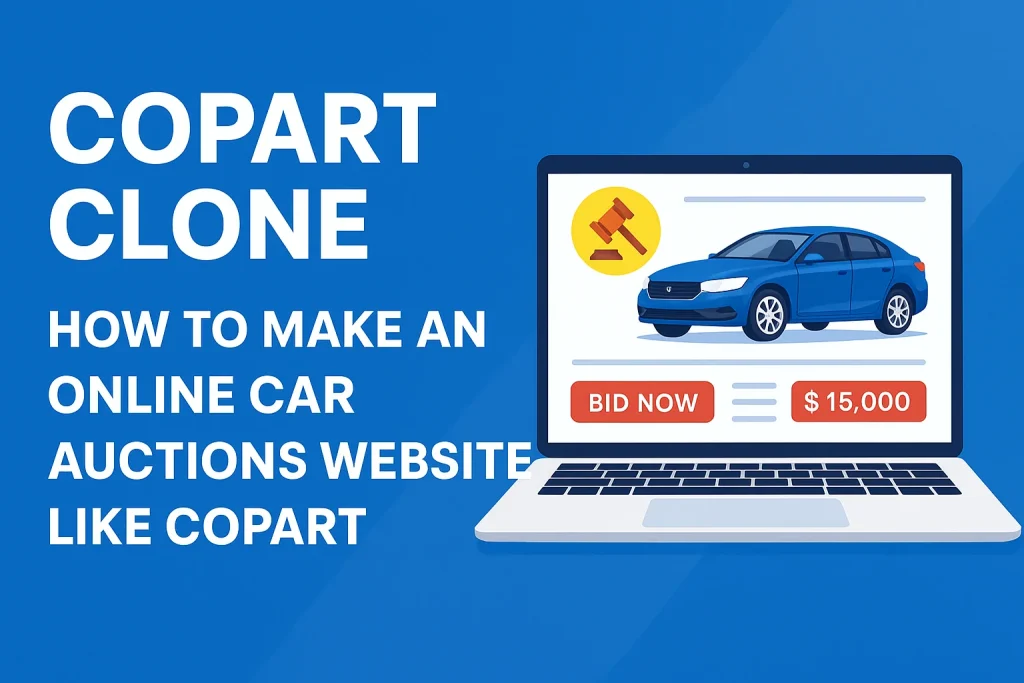
As someone deeply involved in the digital business space, I’ve noticed a rising trend in online car auctions. Platforms like Copart have completely changed how people buy and sell used, salvage, and even high-end vehicles. Copart isn’t just a marketplace—it’s a powerful tech-based auction system that connects car sellers (like insurance companies, dealerships, and individuals) with a global pool of buyers.
Now imagine building something similar on your own terms.
Yes, launching a Copart clone website is not just possible—it’s also a very profitable business model, especially if you’re targeting niche segments like damaged vehicles, repo cars, or even electric vehicles (EVs).
As per my research, the global online car auction market is expected to grow beyond $8 billion USD by 2028. And with more people looking to avoid middlemen and offline dealerships, the timing couldn’t be better to launch your own vehicle auction platform.
In this guide, I will walk you through each step to build a car auction website like Copart. Whether you’re a startup founder, investor, or a development agency planning to offer this as a product—this breakdown will help you understand the entire business, technology, and revenue aspects.
Let’s begin with understanding the core features that make Copart successful.
Core Features of a Copart-Like Online Car Auction Platform
From my research and experience in building digital marketplaces, I’ve found that functionality and trust are two key pillars of a successful car auction platform. Copart mastered both with a smart mix of technology and user experience. So if you’re planning to build your own Copart clone, here are the must-have features you need to include:
1. User Registration and KYC Verification
Buyers and sellers must be able to register easily, but for trust and legal reasons, adding identity verification (KYC) is a must. It also helps you prevent fake bidders or sellers.
Pro Tip: Integrate Aadhaar/PAN verification in India or Driver’s License for the US to build trust.
2. Vehicle Listings with Detailed Specs & Photos
Allow sellers to list vehicles with full details like make, model, year, condition, mileage, accident history, title status (clean, salvage), etc. Add the option to upload multiple high-quality images and videos.
3. Live Auction System (Timed Bidding)
This is the heart of the business. Create a real-time bidding system with:
- Countdown timers
- Auto-bid (proxy bid)
- Bid history
- Bid confirmation alerts
As I found in my research, WebSocket or Firebase can power real-time bidding easily.
4. Vehicle Inspection Reports (Optional Add-on)
Allow sellers to upload certified third-party inspection reports or allow buyers to request one. This builds buyer confidence and reduces post-auction complaints.
5. Membership Plans (Like Copart’s Buyer Tiers)
You can monetize access by creating multiple user tiers:
- Free (Limited access)
- Basic (View + Watch auctions)
- Premium (Full bidding rights)
This is a smart revenue model Copart uses and you should consider replicating.
6. Payment Gateway Integration
Allow secure payments for:
- Bidding deposit
- Auction wins
- Delivery or processing fees
Use Razorpay, Stripe, or PayPal based on your target country.
7. Admin Dashboard
As a platform owner, you’ll need full control:
- Manage listings, bids, users
- View sales reports
- Set commission rates
- Approve/disapprove listings
- Handle disputes
8. Search & Filter System
Buyers should be able to search using filters like:
- Brand
- Year
- Condition (salvage, accidental, clean)
- Fuel type
- Auction ending soon
Smart filters = better user experience = more sales.
9. Location-based Inventory Mapping
Show listings based on proximity or city. Especially useful if you plan vehicle pickup from seller’s location or have regional yards.
10. Mobile Responsiveness or App Version
Today, over 60% of users browse and bid from mobile devices (Source: Statista, 2024). So ensure your platform is fully responsive or offer an Android/iOS app.
Tech Stack and Development Options: No-Code, Custom Build or SaaS
When I first explored the idea of building a Copart-style car auction platform, one of the biggest decisions was choosing the right tech approach. Your development path will directly impact cost, timeline, scalability, and future upgrades. So let me break down the three main options I’ve considered, used, or helped clients build with:
1. Custom Development (For Full Control & Scalability)
If you’re serious about building a long-term, scalable business, go for custom development. With a dedicated team, you can control everything from backend logic to UX to performance optimization.
Recommended Tech Stack:
| Layer | Tech Suggestions |
|---|---|
| Frontend | React.js / Vue.js |
| Backend | Node.js / Laravel / Django |
| Real-Time Bidding | WebSockets / Firebase / Pusher |
| Database | PostgreSQL / MongoDB |
| Hosting | AWS / DigitalOcean / Google Cloud |
| Payments | Stripe / Razorpay / PayPal |
| Notifications | Twilio (SMS) / SendGrid (Email) |
Estimated cost: $8,000 – $30,000+ (depending on features & team location)
Timeline: 2 to 5 months
2. SaaS-Based Auction Platform (For Fast Launchers)
There are SaaS tools like AuctionSoftware.com or Bidsquare that let you launch an auction site with minimal coding. These are ready-made platforms, often offering car auction templates.
Pros:
- Fastest go-to-market (under a week)
- Hosting included
- Customer support and security handled
Cons:
- Less customization
- Monthly fees (avg $100–$500)
- Limited ownership of source code
Best for MVPs, pilot launches, or low-budget startups.
3. No-Code Platforms (For DIY Entrepreneurs)
If you don’t have a dev team or coding background, tools like Bubble.io, Webflow + Airtable + Zapier, or Adalo can help create a simple version of an auction website.
Use Case:
- Small-scale listing and bidding
- Testing a niche like “EV auctions” or “scrap car resale”
Not recommended for serious, large-scale platforms due to performance limits.
My Personal Suggestion:
As per my experience, I always suggest start lean with SaaS or a basic custom MVP, and once the model is validated, move to full-stack custom development for scale and flexibility.
Revenue Model – How to Make Money from Your Copart Clone
If you’re investing in building a Copart-style platform, let’s be real—you’re doing it not just to help people, but to build a solid revenue-generating business. From my experience in launching platforms and studying how Copart and others work, here are 6 proven ways you can monetize your online car auction website:
1. Buyer Membership Plans (Tiered Access)
This is one of the biggest revenue streams for Copart—and you can do the same. Offer free browsing but charge for full auction participation. For example:
- Basic Plan: ₹999/month – Can watch auctions
- Pro Plan: ₹2,999/month – Can place bids
- Premium Plan: ₹4,999/month – Early bidding, priority support
Recurring income = consistent cash flow
2. Seller Listing Fees
Charge a small fee for every vehicle listed on your platform. It could be flat (₹500 per listing) or percentage-based (e.g., 1% of reserve price).
Example: If a seller lists a car worth ₹3,00,000, you earn ₹3,000.
3. Final Sale Commission
When a car is successfully sold, take a success commission from either buyer, seller, or both.
Average in the industry: 5% to 15% depending on the vehicle type.
High-ticket items = high commissions
4. Add-On Services
Offer premium features such as:
- Vehicle inspection reports
- Insurance tie-ups
- Pickup & Delivery logistics
- Title paperwork assistance
All of these can be additional paid services to boost your per-customer revenue.
5. Featured Listings / Banners
Allow sellers to highlight their cars on the homepage or top of search results. You can charge ₹499–₹1999 per feature depending on your site traffic.
As I’ve seen on other marketplaces, this alone can drive 25%+ extra revenue.
6. Affiliate & Partner Programs
Tie-up with loan providers, insurance companies, and spare parts dealers. Send them leads and earn commission per referral or conversion.
This works great in India and the USA where used car financing is booming.
In short, once your platform gains traffic and trust, the revenue potential is massive and recurring. You’re not just building a website—you’re building an ecosystem around vehicle sales.
Step-by-Step Development Process – From Idea to Launch
Building a Copart clone isn’t just about hiring developers and launching a website. It’s a complete business cycle that needs planning, execution, testing, and promotion. Based on my experience with product launches and digital platforms, here’s the step-by-step process I recommend:
Step 1: Define Your Niche & Audience
Before you write a single line of code, decide:
- Are you targeting salvage vehicles, electric cars, or general used vehicles?
- Will it be B2B (dealers, insurance firms) or B2C (general buyers/sellers)?
- Will your audience be local (India-based) or global?
Example: Starting with “Used Electric Cars Auction in Delhi NCR” is more focused than launching nationwide on Day 1.
Step 2: Finalize Features and Business Model
Prepare a Feature Document and decide:
- What features you want in V1 (MVP)
- What monetization method to include from Day 1
- Whether you’ll use SaaS, No-code, or Custom Development
Clarity in planning saves you money during development.
Step 3: Hire a Development Team or Agency
You can:
- Hire freelancers (if budget is low)
- Hire an experienced dev agency (safer & faster)
- Or use white-label platforms and customize
Make sure your team understands auction logic and has worked on real-time apps.
Step 4: Design UI/UX (User Interface and Experience)
Get wireframes or mockups built first. Focus on:
- Clean homepage
- Easy navigation for auction listings
- Simple registration and bidding process
Tools like Figma or Adobe XD are ideal for mockups.
Step 5: Start Development (Backend + Frontend)
Split the work into sprints:
- Week 1-2: User system + listing features
- Week 3-5: Auction system + payment integration
- Week 6-8: Admin panel, KYC, email notifications
- Week 9-10: Testing and bug fixing
You can go live within 60–90 days if the team stays focused.
Step 6: Test With Real Listings (Soft Launch)
Before full launch, invite 10–50 users from your network to test:
- Bidding flow
- Notifications
- Mobile experience
Always do soft launch to catch bugs early.
Step 7: Launch and Promote
Go live with:
- Social media ads (Facebook, Google)
- Local car dealer partnerships
- Auto enthusiast groups on Facebook, Telegram, and WhatsApp
Use referral bonuses or ₹500 signup credit to bring traction in the beginning.
Once you launch, start collecting data—what cars are getting sold, who are the active bidders, what features people request. This will guide future updates and revenue growth.
Building a powerful online car auction site is just half the game. I’ve seen many well-developed platforms fail simply because they didn’t attract the right users. Based on my experience launching similar platforms, here’s a practical and proven marketing plan to get real users, dealers, and organic traffic right from Day 1.
1. Pre-Launch Waitlist & Hype Building
Start 30 days before launch with a landing page:
- Offer early access or ₹500 bidding credit
- Collect emails and phone numbers
- Use WhatsApp broadcast to build a pre-launch audience
Tools: Mailchimp, Sendinblue, or WhatsApp API
2. Target Car Dealers with Direct Outreach
Your supply is everything in the beginning. Start by:
- Visiting or calling 50+ local used car dealers
- Offering free listings for the first 60 days
- Explaining how they’ll get more exposure and sales without showroom visits
Even 10–20 dealers can help you launch with 100+ cars in inventory.
3. Facebook & Google Ads (Geo + Intent Targeting)
Use micro-targeted ads like:
- “Buy Used Cars at ₹50,000 – Start Bidding Now!”
- “Scrap Your Car? List It Online & Get Bids!”
Target locations like Tier-1 cities or metro regions + interests like Maruti, Tata, Auto Expo, etc.
Budget: ₹1,000–₹3,000/day can bring good initial traffic if optimized right.
4. Local SEO + Google My Business
Add your platform on:
- Google Business Profile with categories like “Used Car Dealer,” “Online Car Auction”
- Directory sites like JustDial, Sulekha, and JDMart
- Start a blog with SEO-focused articles like:
- “How to Sell Your Car Online in India”
- “Car Auction vs Direct Sale – Which is Better?”
Organic traffic from search will bring long-term users who are ready to buy/sell.
5. YouTube & Instagram Reels – Behind the Scenes
Record short reels showing:
- How your auction system works
- Cars being listed
- User testimonials (even fake ones at first)
One viral video can bring 10,000+ website visits.
6. Referral Program for Buyers & Sellers
Give ₹200–₹500 to users who refer friends to list or bid.
- Create a simple “Refer & Earn” section on the site
- Use code tracking or coupon-based system
Word of mouth is strong in auto circles, especially in Tier 2/3 cities.
7. Partnerships with Auto Influencers & Bloggers
Reach out to:
- YouTubers who review budget/used cars
- Car mechanics with 10K+ Instagram following
- Regional influencers from auto expos
Offer them affiliate commission or sponsorship to talk about your platform.
In the first 30–60 days, your goal should be simple:
Fill the platform with enough listings + Get 1,000 buyers registered
That’s all you need to start the traction snowball.
Legal, Compliance & Licensing – What You Need to Launch a Car Auction Business
When I started researching the online vehicle resale and auction space, I quickly realized that it’s not just about tech and marketing—there are serious legal considerations involved. Selling used vehicles, especially through auctions, involves trust, documentation, and regulatory compliance.
Here’s what you need to know before launching your Copart-style car auction business:
1. Business Registration and Licensing
Register your business as:
- Private Limited Company (preferred for tech startups in India)
- Or LLC if you’re launching in the US or international market
Get a valid GST number, Trade License, and PAN/TAN for tax purposes.
In India, register on the MCA Portal for company incorporation.
2. Motor Vehicle Dealer License (State-Wise)
Many Indian states require you to have a “Used Car Dealer License” if you’re enabling the sale of vehicles. Check with your state’s RTO (Regional Transport Office).
This builds trust and legally allows you to hold, resell, or help others sell vehicles.
3. KYC and Data Privacy Compliance
As per Indian IT laws and international data protection rules (like GDPR), your platform must:
- Collect and store user identity securely
- Show privacy policy and terms of use
- Offer data deletion requests
Use secured storage (AWS, Firebase) and SSL certificates to protect data.
4. Secure Payments & Escrow Handling
To avoid legal troubles, especially with disputes, consider integrating:
- Escrow accounts (money held till car is delivered)
- Digital receipts and invoicing
- Transparent fee structure
Stripe, RazorpayX, and Escrow.com are great tools to implement these legally.
5. Vehicle Ownership & Title Transfer Protocols
Buyers and sellers should:
- Upload RC (Registration Certificate)
- Declare insurance status
- Follow proper title transfer processes based on regional RTO rules
In some cases, title transfer may only happen offline—your platform should guide users properly on this.
6. Terms & Conditions, Disclaimers, and Buyer Protection
Add strong legal documentation on your website:
- Terms of Service
- Refund Policy
- Buyer and Seller Liability Clauses
Hire a legal advisor to write platform-specific clauses to avoid future disputes.
Bonus: Insurance Tie-ups (Optional)
Tie up with 3rd-party insurance providers so buyers can get their vehicle insured directly via your platform. It’s not legally required but adds an extra layer of trust and value.
As per my experience, sorting legal structure and licenses before launch builds trust with sellers, prevents penalties, and makes you look professional in front of B2B partners and banks.
Estimated Cost to Build a Copart Clone Website/App
Whether you’re bootstrapping or raising funds, knowing the true cost of building a car auction platform is critical. I’ve worked on similar projects, and based on real-world developer pricing (India, US, Europe), here’s a clear breakdown of what you should expect to spend—from MVP to full-feature launch.
Cost Breakdown by Component
| Feature / Module | Estimated Cost (USD) | Description |
|---|---|---|
| UI/UX Design (Web & Mobile) | $800 – $1,500 | Wireframes, mockups, mobile-friendly design |
| User Management & KYC System | $1,000 – $2,000 | Registration, login, KYC upload & verification |
| Vehicle Listing System | $800 – $1,200 | Upload, edit, manage vehicle details & images |
| Real-Time Auction Engine (Bidding Logic) | $2,500 – $5,000 | Live bidding with timer, auto-bid, history |
| Payment Gateway & Escrow Integration | $1,000 – $2,500 | Stripe, Razorpay, Wallets, Escrow API |
| Admin Panel | $1,500 – $2,500 | Manage listings, users, disputes, reports |
| Notification System (Email + SMS) | $500 – $1,000 | OTP, bid alerts, reminders |
| SEO & Blog Setup | $300 – $600 | On-page SEO, blogging tool, sitemaps |
| Testing & QA | $500 – $1,000 | Manual + automated testing, bug fixing |
| Mobile App (Optional) | $2,000 – $4,000 | React Native/Flutter-based mobile apps |
| Legal Docs & Compliance Setup | $300 – $700 | Policies, disclaimers, local registration help |
Total Estimated Cost
- MVP Version (Basic Website): $6,000 – $8,000
- Full Platform (Web + Mobile + Escrow + Admin): $10,000 – $18,000
- With White Label SaaS Solution: $2,000 – $4,000/year (subscription)
If you’re hiring developers in India or Eastern Europe, you can reduce cost by 30–40% compared to US/UK agencies.
Budget-Saving Tips:
- Start with web only; add mobile apps later based on usage.
- Use open-source auction engines and customize them.
- Use Firebase or Socket.io for real-time features to save on infra cost.
- Don’t overbuild—focus on core auction features first.
In my opinion, a budget of $8K–$12K is more than enough to launch a polished, scalable Copart clone that works in India or globally.

 RTA Dubai Clone – How to Make a Parking App Like RTA Dubai