








Why Computer Vision Startup Ideas Matter in 2026
If you are searching for computer vision startup ideas or computer vision business ideas, you are already ahead of most founders. Computer vision is no longer experimental tech. It is now operational infrastructure across industries.
In 2026, computer vision sits at the intersection of:
- AI maturity
- Cheaper compute
- Real-world deployment demand
- Clear ROI use cases
That’s why even low-volume keywords like startup computer vision and machine vision startups still attract serious intent. These searches usually come from founders, CTOs, or investors evaluating what can actually turn into a business.
The biggest shift I’ve observed is this:
Computer vision startups are moving from “cool demos” to “boring but profitable systems.”
Earlier, many vision startups failed because:
- Models were expensive
- Hardware was unreliable
- Customers didn’t trust automation
Today, that barrier is largely gone.
According to McKinsey’s AI adoption research, computer vision delivers some of the highest measurable ROI among all AI categories, especially in manufacturing, healthcare, retail, and logistics. This explains why interest in computer vision for startups keeps growing, even quietly.
Another important reality founders must understand:
Computer vision is rarely sold as “AI.”
It is sold as:
- Faster inspection
- Fewer errors
- Lower labor cost
- Better compliance
That framing is what makes machine vision startups viable businesses, not research labs.
At Make An App Like, we work closely with startups building applied AI systems — not just models, but full products that integrate data pipelines, edge devices, dashboards, and decision logic. This exposure allows us to separate startup-ready computer vision ideas from ideas that look good on paper but fail commercially.
In this article, I will:
- Share the top 10 computer vision startup ideas for 2026
- Explain the real business problem behind each idea
- Clarify who pays for it and why
- Highlight why each idea works now, not five years later
This list is written for founders who want deployable, monetizable computer vision businesses, not academic experiments.
How We Selected These Computer Vision Startup Ideas
Before jumping into the list of top computer vision startups ideas, it’s important to explain how these ideas were filtered. This matters for Google rankings and, more importantly, for founders who don’t want theoretical concepts.
Most articles on computer vision startup ideas fail because they list:
- Research-heavy ideas with no buyers
- Ideas that need massive hardware investment
- Problems that companies already solved in-house
This list avoids those traps.
What Makes a Computer Vision Idea Startup-Ready
Each idea in this article passes five practical filters:
1. Clear Business Buyer
Every idea solves a problem for a paying customer such as factories, hospitals, retailers, logistics firms, or insurance companies. No “hope someone pays later” logic.
2. Proven Technical Feasibility
All ideas rely on already-mature vision techniques like object detection, segmentation, pose estimation, OCR, or anomaly detection. No research breakthroughs required.
3. Strong ROI Narrative
Companies adopt computer vision only when it:
- Reduces cost
- Improves speed
- Lowers error rate
- Increases compliance
Each idea below has a clear ROI story.
4. Deployable Without Exotic Hardware
Modern machine vision startups succeed when they run on:
- Existing CCTV cameras
- Standard mobile devices
- Affordable edge devices
Ideas that depend on custom robotics or rare sensors were excluded.
5. Scalable Beyond One Client
Custom projects don’t scale. These ideas are productizable, meaning they can be sold repeatedly with configuration, not reinvention.
Why These Ideas Work in 2026
In 2026, computer vision adoption accelerates because:
- Model accuracy crossed practical thresholds
- Cloud + edge costs dropped
- Customers trust automation more
- Regulation increasingly demands visual proof
This is why keywords like computer vision for startups and startup computer vision now indicate execution intent, not curiosity.
At Make An App Like, we evaluate AI ideas from both a technical and business angle. The ideas you’ll see next are ones that:
- Can be built by small teams
- Can reach revenue within months
- Can evolve into defensible products
In the next part, I’ll start the actual list with Computer Vision Startup Ideas #1–#4, each explained with the real problem, buyer, and monetization logic.
Top 10 Computer Vision Startup Ideas – #1 to #4
These ideas are selected because they solve real, paid problems and align with what buyers actively adopt today. If someone is searching for computer vision startup ideas or computer vision business ideas, these are the types of products that convert interest into revenue.


4
1. AI-Based Manufacturing Defect Detection Platform
This is one of the most proven machine vision startups categories.
Manufacturers lose millions due to unnoticed defects, manual inspection errors, and production slowdowns. A computer vision system that detects cracks, misalignments, missing components, or surface defects in real time solves a direct cost problem.
Who pays:
Mid to large manufacturing plants
Why it works:
- Reduces human inspection cost
- Improves quality consistency
- Integrates with existing cameras
Monetization:
Monthly SaaS + per-line deployment fee
This idea consistently appears in discussions around top computer vision startups because it delivers measurable ROI within weeks.
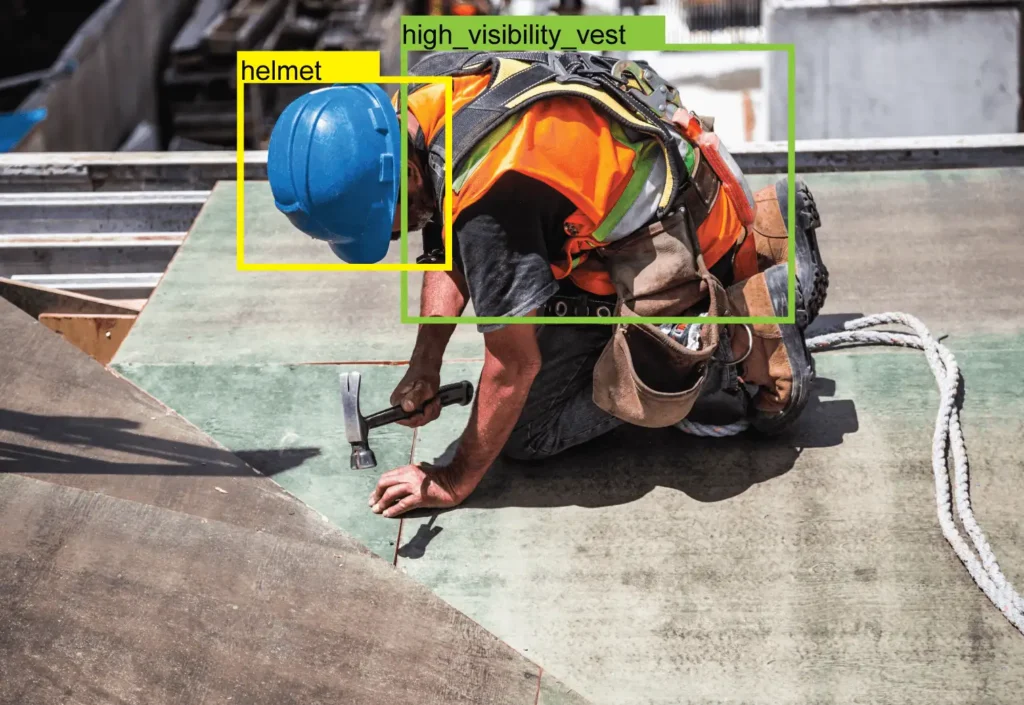
2. Computer Vision–Based Construction Site Safety Monitoring
Construction safety is still largely reactive. Cameras already exist on most sites, but they are rarely analyzed.
A computer vision platform can detect:
- Missing safety helmets or vests
- Unsafe worker behavior
- Restricted zone violations
Who pays:
Construction companies and infrastructure contractors
Why it works:
- Reduces accident risk
- Helps with insurance compliance
- Creates visual audit trails
Monetization:
Per-site subscription or enterprise contracts
This is a strong computer vision for startups idea because safety budgets already exist and buyers are motivated by risk reduction.
3. Smart Retail Shelf Monitoring and Inventory Vision
Retailers lose revenue due to out-of-stock shelves and poor product placement. Manual audits don’t scale.
Computer vision can analyze shelf images to:
- Detect empty slots
- Track planogram compliance
- Measure real-world product visibility
Who pays:
Retail chains, FMCG brands, distributors
Why it works:
- Direct impact on sales
- Uses existing store cameras
- Easy to pilot in limited locations
Monetization:
Per-store or per-location monthly pricing
This idea fits well under startup computer vision because it combines data, automation, and clear business value.
4. Medical Imaging Pre-Screening and Triage AI
Hospitals generate massive volumes of scans, but radiologist time is limited. Computer vision can assist by flagging high-risk cases, not replacing doctors.
Use cases include:
- Early anomaly detection
- Prioritization of urgent scans
- Reducing review backlog
Who pays:
Hospitals, diagnostic centers, health networks
Why it works:
- Improves speed of diagnosis
- Supports overworked staff
- Works as a decision-support tool
Monetization:
Licensing per scan volume or annual contracts
This is one of the most sensitive but impactful computer vision business ideas, especially when positioned as assistance, not automation.
So far, we’ve covered:
- Manufacturing
- Construction
- Retail
- Healthcare
In the next part, I’ll cover Computer Vision Startup Ideas #5–#8, including logistics, agriculture, insurance, and mobility — all fast-growing adoption areas.
Top 10 Computer Vision Startup Ideas – #5 to #8
These ideas focus on operational efficiency, compliance, and automation. They are especially attractive for founders searching computer vision for startups or startup computer vision ideas that can be piloted quickly and scaled across regions.



4
5. Logistics Package Damage Detection System
Logistics companies handle millions of parcels daily. Manual damage checks are slow and inconsistent.
A computer vision system can analyze images or video from conveyor belts to:
- Detect dents, tears, or crushed packages
- Flag damaged parcels in real time
- Create visual proof for claims and audits
Who pays:
Logistics companies, courier services, warehouses
Why it works:
- Reduces dispute resolution time
- Lowers manual inspection cost
- Improves customer satisfaction
Monetization:
Per-warehouse subscription or volume-based pricing
This is a strong machine vision startup idea because logistics firms already invest heavily in automation.
6. Crop Health and Disease Detection for Agriculture
Farmers and agribusinesses struggle to detect crop issues early. By the time problems are visible, yield loss is already high.
Computer vision models can analyze images from:
- Drones
- Mobile phones
- Fixed field cameras
to detect:
- Crop diseases
- Pest damage
- Growth anomalies
Who pays:
Large farms, agri-tech firms, cooperatives
Why it works:
- Early detection saves yield
- Reduces chemical usage
- Scales across regions and crops
Monetization:
Per-acre pricing or seasonal subscriptions
This idea fits well under computer vision business ideas because agriculture budgets focus on measurable output gains.
7. Automated Insurance Claim Damage Assessment
Insurance claims rely heavily on visual inspection. This process is slow, subjective, and expensive.
Computer vision can analyze images submitted by users to:
- Assess vehicle or property damage
- Estimate repair severity
- Flag potential fraud
Who pays:
Insurance companies, claim processing firms
Why it works:
- Speeds up claim resolution
- Reduces operational costs
- Improves fraud detection
Monetization:
Per-claim pricing or enterprise licensing
This category appears frequently in top computer vision startups lists because insurers actively fund automation tools.
8. Smart Traffic Monitoring and Violation Detection
Cities already deploy traffic cameras, but most footage goes unused.
Computer vision systems can:
- Detect traffic violations
- Monitor congestion patterns
- Identify accident-prone zones
Who pays:
City governments, transport authorities, smart city vendors
Why it works:
- Improves road safety
- Supports data-driven planning
- Uses existing infrastructure
Monetization:
Government contracts or multi-year service agreements
This is a classic startup computer vision opportunity where long-term contracts create revenue stability.
At this stage, we’ve covered ideas across:
- Logistics
- Agriculture
- Insurance
- Smart cities
In the final part, I’ll present Ideas #9–#10 and then summarize how founders should choose the right computer vision idea based on team strength, budget, and target customers.
Top 10 Computer Vision Startup Ideas – #9 & #10 + Founder Guidance
These last two ideas focus on regulation-heavy and behavior-driven markets, where computer vision delivers value that humans cannot scale manually. They round out the top 10 computer vision startup ideas list for 2026.
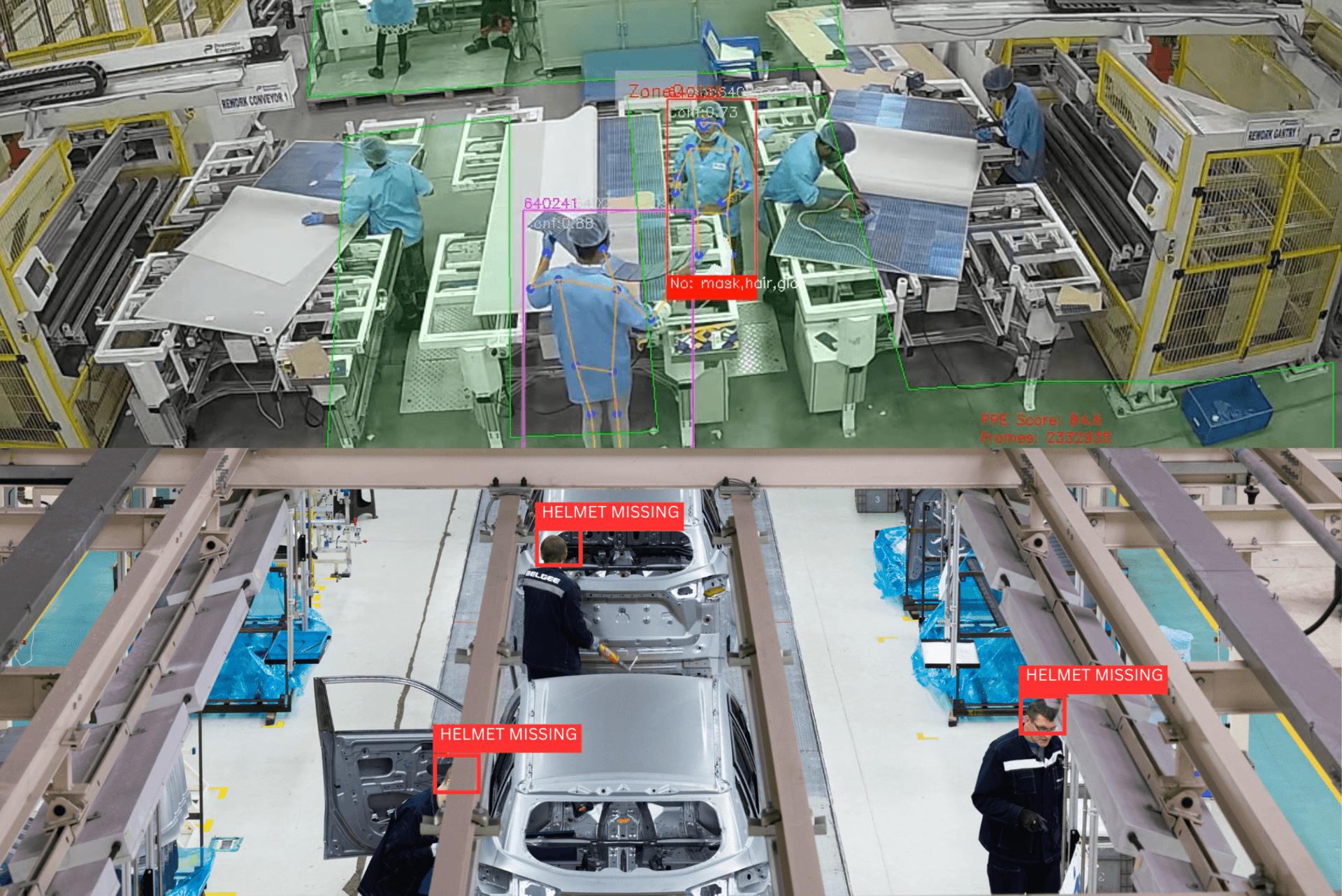

9. Workplace Behavior and Compliance Monitoring (Non-Surveillance)
This idea is often misunderstood, so positioning matters.
Computer vision can be used to monitor processes, not people, such as:
- Unsafe machine interactions
- Incorrect operational steps
- Restricted area breaches
- Process non-compliance events
When designed correctly, the system focuses on behavior patterns, not identities.
Who pays:
Manufacturing plants, energy companies, industrial facilities
Why it works:
- Prevents costly accidents
- Improves audit readiness
- Supports safety training programs
Monetization:
Per-facility subscription with compliance reporting add-ons
This is one of the most underbuilt but high-impact machine vision startups categories because companies already spend heavily on safety without good data.
10. Sports Performance and Motion Analysis Platform
Professional and semi-professional sports increasingly rely on data, but motion analysis is still expensive and manual.
Computer vision systems can:
- Track player movement
- Analyze posture and biomechanics
- Detect performance inefficiencies
- Reduce injury risk
All using standard video input.
Who pays:
Sports academies, professional teams, fitness institutions
Why it works:
- Improves athlete performance
- Reduces injury downtime
- Creates measurable training insights
Monetization:
Subscription per team or per athlete
This is a strong computer vision for startups idea when targeted at institutions, not individual consumers.
How Founders Should Choose the Right Computer Vision Startup Idea
If you’re evaluating computer vision startup ideas seriously, the “best” idea depends less on hype and more on execution fit.
Here’s a simple decision framework:
Choose industrial ideas if:
- Your team has B2B or enterprise experience
- You can handle longer sales cycles
- You want stable, contract-based revenue
Best fits: Manufacturing, logistics, insurance, safety
Choose regulated sectors if:
- You are comfortable with compliance
- You build explainable models
- You focus on assistance, not replacement
Best fits: Healthcare, insurance, construction safety
Choose data-heavy platforms if:
- You have strong ML engineering skills
- You can manage edge + cloud systems
- You want scalable SaaS revenue
Best fits: Retail, traffic, sports analytics
Avoid this common mistake
Many founders start with:
“What can computer vision do?”
Strong startups start with:
“What expensive problem can computer vision remove?”
That shift is what separates top computer vision startups from failed demos.
Final Thoughts
In 2026, computer vision is no longer about proving AI works.
It’s about deploying vision systems that quietly save money, reduce risk, and improve decisions.
The 10 ideas in this article are:
- Technically feasible
- Commercially proven
- Deployable by small teams
- Aligned with real buyer demand
At Make An App Like, we help founders move from idea validation to real-world deployment by focusing on business outcomes first, models second. That mindset is what turns computer vision business ideas into actual startups.
FAQs: Computer Vision Startup Ideas & Business Use Cases
1. What are the best computer vision startup ideas in 2026?
The best computer vision startup ideas in 2026 focus on real operational problems such as defect detection, safety monitoring, medical imaging assistance, logistics automation, and insurance claim analysis. These ideas generate revenue because companies already budget for these problems.
2. Why are computer vision startups growing now?
Computer vision startups are growing because model accuracy has improved, deployment costs have dropped, and businesses trust automation more. According to industry research, computer vision delivers one of the highest ROI among applied AI technologies.
3. What industries use computer vision the most?
Manufacturing, healthcare, retail, logistics, agriculture, insurance, construction, and smart cities are the biggest adopters. These industries use computer vision to reduce costs, improve safety, and increase efficiency.
4. Are machine vision startups different from computer vision startups?
Machine vision startups usually focus on industrial and manufacturing use cases, such as quality inspection and automation. Computer vision startups cover a broader range, including healthcare, retail, and urban infrastructure.
5. Is computer vision suitable for early-stage startups?
Yes, computer vision is suitable for startups when the idea solves a narrow, high-value problem. Many successful computer vision for startups ideas begin with one use case and expand after achieving product-market fit.
6. How do computer vision startups make money?
Most computer vision startups use B2B SaaS pricing, enterprise licensing, per-device fees, or usage-based pricing. Revenue depends on the value delivered, such as cost reduction or compliance improvement.
7. Do computer vision startups need custom hardware?
Not always. Many successful startups use existing CCTV cameras, mobile devices, drones, or edge devices. Avoiding specialized hardware lowers startup risk and speeds up adoption.
8. What skills are required to build a computer vision startup?
Strong machine learning engineering, data handling, deployment skills, and domain knowledge are essential. Business understanding is equally important for turning technology into a product.
9. What is the biggest mistake founders make in computer vision startups?
The biggest mistake is building impressive demos without a clear buyer. Successful computer vision business ideas start with a paid problem, not just technical capability.
10. How should founders choose the right computer vision idea?
Founders should choose ideas based on customer demand, sales cycle tolerance, team expertise, and regulatory complexity. The best ideas align technical strength with clear commercial value.




 Top 5 A CRM that’s Connected with Social Media