



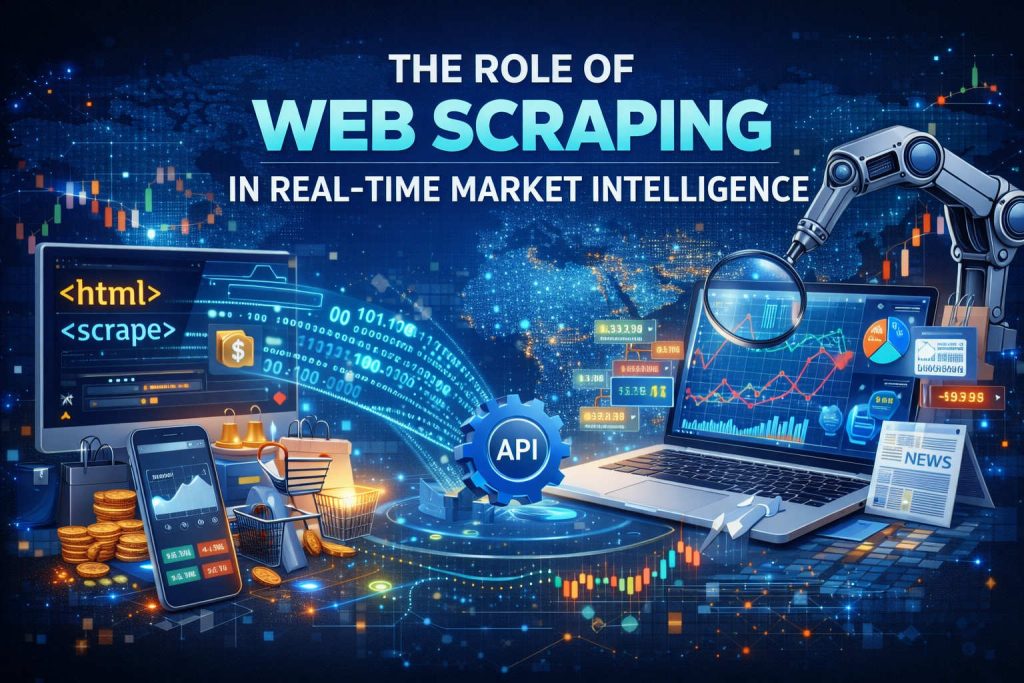
Digital platforms are full of beneficial data that helps your business go the extra mile. This data is the only way to thrive in the competitive market. It unlocks insights that are used for refining your organization and boosting your revenue. By using web scraping in real-time market intelligence, you can take your business to the next level. It empowers you to make data-driven decisions to succeed in the market. Today’s post covers the role of web scraping in real-time market intelligence and its importance for businesses.
What is Market Intelligence?
Market intelligence is an approach to gathering and analyzing information to drive future decisions. It helps businesses to study rival strategies. With marketing intelligence, marketers can spot growth areas and track competitors to benchmark strategies.
What is Web Scraping?
Web scraping is a systematic way to scrape useful data from digital platforms. This is an automated process that uses bots/crawlers to visit the targeted website page. The collected data is then converted into structured data for analysis. Web scraping can be divided into 5 phases mentioned below.
● Planning: You need to choose a targeted website and decide the data to scrape.
● Gathering: After this, the bot will collect raw data from the website.
● Organizing: Data will be arranged neatly and grouping similar items.
● Cleaning: In this phase, extra details will be removed.
● Using: Finally, use the scraped data for market research and analysis.
Why Real-Time Data Matters for Market Intelligence?
Real-time data is an operational guide for your business. It provides comprehensive insights that are used to improve customer experience and maintain loyalty. Live data helps organizations spot issues quickly and track sudden market changes. For market intelligence, real-time web scraping empowers businesses to adapt to market changes fast.
Real-time data is a great source to maintain a competitive edge by staying ahead of rivals. This data boosts business efficiency to improve operations. Live data enables organizations to foster accuracy by using fresh information. Real-time data is important for market intelligence because it provides regional insights that can help businesses track local demand shifts.
What Market Intelligence can you scrape in Real-Time?
You can scrape the following market intelligence in real-time.
| Data | Explanation |
| Product | This data can be item details and features. |
| Price | It costs, discounts, changes, etc. |
| Reviews | This data can be buyer opinions and ratings. |
| Product availability | Product availability data can be at stock levels. |
| Social Media | Social media data can be posts, trends, sentiment, etc. |
| News | This can be industry updates and events. |
| Geolocation Data | It is the regional demand pattern. |
| Behavior | This is buying patterns and habits. |
| Advertising | It provides competitor campaign info. |
| Supplier Data | These data can be vendor info and pricing. |
| Shipping Data | It can be delivery times and logistics. |
| Coupon Codes | Coupon codes can be discounted and promotional offers. |
| Stock Availability | This data can be regional stock, distribution data, and more |
Applications of Web Scraping in Market Intelligence
The following are the applications of web scraping in market intelligence:
● Dynamic Pricing: Using web scraping, you can pull out pricing from online stores. This is very helpful in adjusting costs dynamically. In response to demand fluctuations, competitors’ pricing helps businesses match supply with demand. It enables firms to forecast seasonal and optimize holiday pricing.
Dynamic pricing provides customer segments to personalize offers instantly. To avoid storage expenses and align demand, businesses can leverage this data to maintain inventory levels and prevent overstock issues. It provides shipping costs to adjust delivery pricing. Rival’s pricing helps the firms to develop loyalty programs to offer member discounts.
● Sentiment Analysis & Brand Monitoring: Scraping web data is useful to collect customer reviews, and brands can collect buyer sentiment. If brands scrape social media posts, then they can detect public opinion about products and services. Market intelligence data helps news agencies to monitor brand coverage by scraping news articles.
Organizations can scrape social media posts to track hashtags and spot trending topics. It helps to detect a crisis and respond to issues quickly. By scraping web data, businesses can get a reputation score and quantify brand perception. This data is utilized to monitor complaints, which helps to identify negative signals.
● Lead Generation: Scraped data from the competitor’s site is used to generate more business leads. The data scraped from the competitor’s site reveals company profiles to spot potential clients. Pulling out data from the job listing page, organizations can detect hiring opportunities.
Scraping social media boosts your leads by tracking followers and their interests. Organizations can collect subscriber information from newsletter sign-ups to build their lists. Extracting product reviews can empower the sales team to identify active buyers. Scraping supplier listings is helpful for businesses to find vendor contacts.
● Product & Trend Monitoring: Extracting the e-commerce site product page empowers researchers to track new launches so that they can monitor rival strategies and spot emerging products. It fosters innovation and signals the potential for discovering new features. Real-time competitor data is used to understand market demand by judging consumer interest.
Businesses can scrape the photos provided in reviews to analyze real‑world usage. It enables marketers to compare test durations during the trial period. Scraping competitors’ data can help to analyze retailer mix and their track channel expansion.
Businesses can extract data from competitors’ sites to track seasonal add‑ons and explore gift options.
Legal and Ethical Compliance When Scraping for Real-Time Market Intelligence
You must follow legal and ethical compliance when scraping for real-time market intelligence.
● Never scrape copyrighted data, such as creative work, legal online content, or images, to avoid IP violations.
● Always respect users’ privacy, do not scrape sensitive information like social security numbers, financial account numbers, authentication credentials, etc.
● Limit scraping requests to prevent server overload and therefore reduce risk.
● Follow the Terms of Service of the website you are going to scrape to avoid lawsuits and penalties.
● Stay loyal to maintain your brand’s credibility.
● Never extract data, user profiles, purchase history, or subscription content to prevent unauthorized use.
Final Thought
Let’s summarize this post. Web data scraping is a proven technique to bring significant success in business. It can collect raw data from any website and convert it into actionable insight. These insights are utilized for market analysis. However, the importance of data is not just to collect and utilize it in your business; it’s all about how you handle it responsibly. When data is used smartly, it helps reduce risk and strengthen your business presence in the market. In the digital industry, web scraping is not just an automated tool; it’s an asset for every organization.