







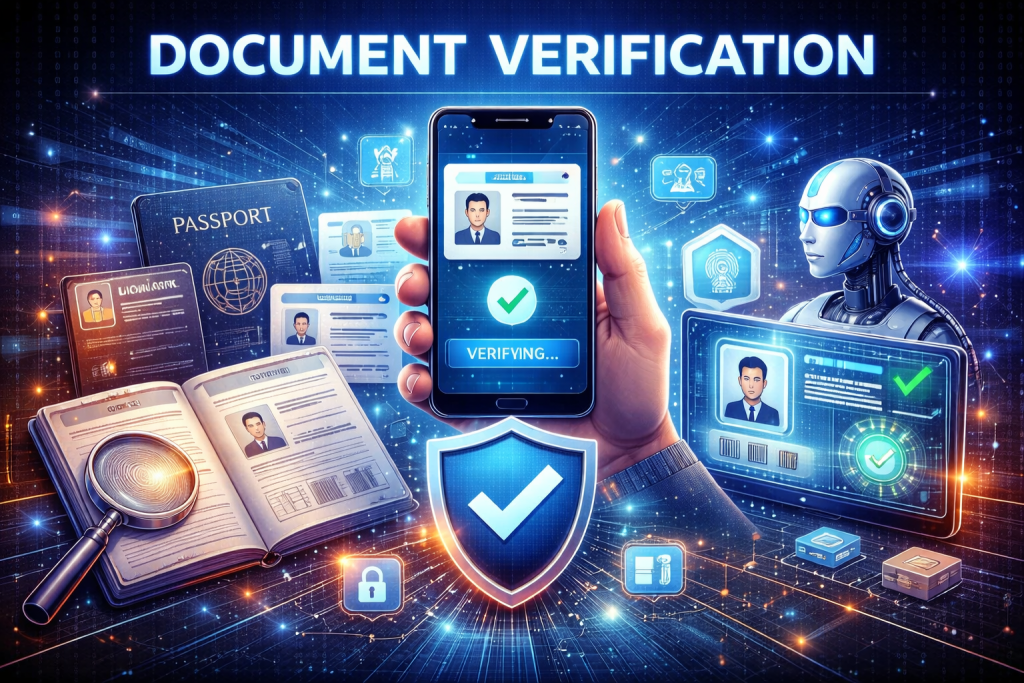
The digital space is no longer password controlled. In a time where the cyber threat develops quicker than the traditional security systems can adapt to it, passwords are now obsolete, unreliable and dangerously accessible to intruders. Breach of data, credential stuffing, phishing and bot-driven attacks have established that the future of online security lies in something much more powerful. Herein lies seamless and real-time identity verification processes and this redefines the manner in which trust is built online and a new phase of painless and smart authentication is introduced.
The Death of Password-Based Protection.
In the past decades, passwords have been the main entry point of digital data. However, with more users using weaker passwords, and after using the same on other platforms, cyber criminals scaled down this vulnerability. The giganticly large breach data sets are propagated through the dark web today where they are considered more of a liability rather than a security measure. Automation or even social engineering can be used to overcome even complicated passwords or two-factor authentication.
This has been a weak point that has led to the transformation to a real time identity verification system which does not check what you know but rather who you are and how you act on the internet.
Harmonious Authentication with Artificial Intelligence and Biometrics
The identity systems of the new generation quietly and silently operate in the background checking the users with biometrics, behavior and real-time data indicators. AI is in the center stage because it would examine facial expressions, voice, device interactions, and environment indications in a few seconds. Such systems determine the presence of the user physically present, to detect manipulation signs and matched activity on established patterns.
One of the most powerful real-time security measures has now been facial recognition, including liveness, detection. Not only does it match the face of a user, it establishes that it is not a photo, mask or deepfake. This makes the use more frictionless to legitimate users and it prevents even the most high-end impersonation attacks.
Identity as a New Behavioral Biometrics
Continuous authentication does not end at physical appearance. Machine learning algorithms are currently analyzing the typing, swipes, taps and navigation behavior of an individual on digital platforms. These micro-behaviors form a distinctive signature that is consistent within the sessions. Behavioral patterns cannot be stolen, guessed or duplicated by criminals, as is the case with passwords.
The outcome is an identity-continuing verification system that does not interfere with the user experience. The user can just interact in a normal manner whilst the system is able to authenticate silently in real time.
The strength of Real-Time Risk Assessment
The fact that seamless verification can be used to assess risk immediately is considered so revolutionary. Unlike the use of fixed rules, real time systems are context sensitive. They look at the reputation of the device used, the history of the location, the integrity of the network, as well as the past activity of the users to determine the safety of a login attempt.
Such a dynamic nature avoids the false positives and makes the experience less rough. When a user is logging in on a different device, but demonstrates the same patterns of behavior, the system can allow access without further assessments. In contrast, in case the system notices something odd despite the right credentials it can interrogate or deny the request on the spot.
Frictionless Customer Experiences of a Global Digital Economy
Financial, e-commerce, government services and other services are businesses embracing seamless verification as a way of minimizing the friction in their business and enhancing trust. The users do not feel the need of remembering passwords or going through pointless security checks. They want quick access without safety being affected.
Real time verification achieves this expectation by eliminating redundant procedures alongside improving protection. This will promote an increased engagement rate, an easier onboarding process, and higher customer satisfaction, particularly in very high trust contexts such as banking and in digital wallets.
A Future Without Passwords
The world is headed towards a passwordless future that is being fuelled by real time identity systems. Companies in the tech sector are spending on recognition tools that do not tolerate human error and are solely concerned with authenticity. This has evolved according to the international security standards and end user need of more convenient and secure digital access.
The change is already taking place. Real-time identity verification is rapidly changing the old security practices, whether it is AI-powered biometrics, uninterrupted behavioral checking, or scoring of risky situations.
Summary: Digital Trust New Standard
Real-time identity verification is a giant step in digital security as it is seamless. It eliminates the hassles of using passwords, guards against advanced threats and assures the individual who has the right account access at the appropriate time. As fraud cases are rising online and people are engaging more in digital interactions, organizations need to be more intelligent and adaptive in their approach to verification.
Digital trust is not about what you know but what you are, what you do and what cannot be imitated, this is the future of digital trust. This is an age of fluidity of identity, intelligent and constantly verified unlocking of a safer digital world as an element of crime control and prevention.




 How a Trusted SEO Link Building Company Can Boost Your Organic Growth