







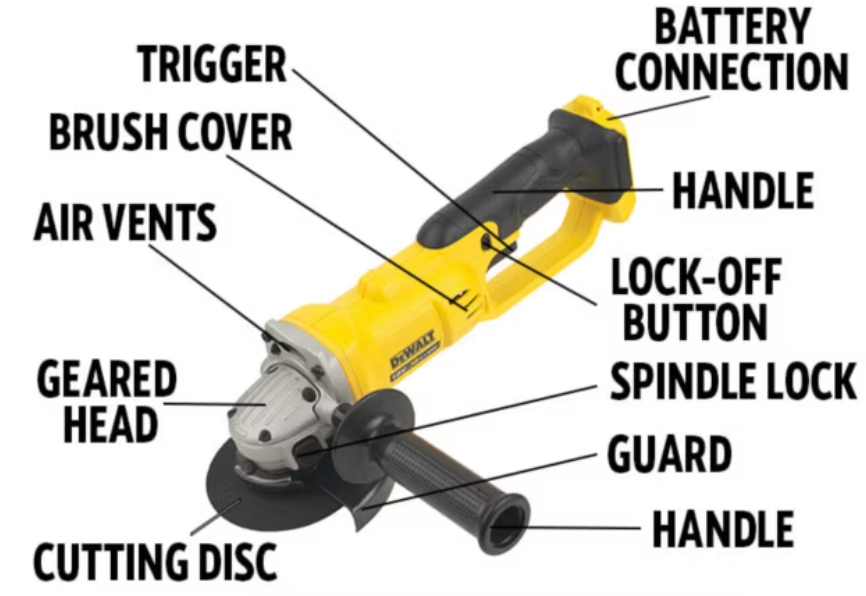
Look, if you’re reading this, you probably already know that shopping for an angle grinder can be overwhelming. There are literally dozens of options out there, each one promising to be the best, and honestly? Most of them blur together after a while.
I’ve been where you are—standing in front of a wall of power tools, trying to figure out what actually matters. Should you go cordless or corded? What size disc do you really need? And don’t even get me started on all the marketing jargon that manufacturers throw around.
That’s why I put together this guide. I wanted to cut through the noise and talk about angle grinders the way a friend would—honest, practical, and actually helpful. We’ll look at the real tradeoffs, talk about what different folks need, and I’ll walk you through five solid options that actually deliver.
What Makes a Good Angle Grinder Anyway?
Before we jump into specific models, let’s talk about what you’re actually looking for in an angle grinder. This matters because the best angle grinder for a metalworker is completely different from the one a tile contractor needs.
Power and RPM are definitely important, but here’s the thing—more power doesn’t always mean better. A 4.5-inch grinder spinning at 11,000 RPM is incredibly nimble and great for detail work, precision cuts, and projects where you don’t need brute force. A 7-inch grinder with 6,000 RPM gives you more cutting capacity and handles tougher jobs, but it’s heavier and harder to control. It’s like the difference between a sports car and a truck—one isn’t objectively better, it just depends on what you’re doing.
Cord vs. Cordless is a real consideration now. Corded grinders have unlimited power and runtime, which is why professionals still love them. But cordless models have gotten seriously good, especially if you’re doing occasional work or don’t want to mess with extension cords. The tradeoff? Battery cost and eventual degradation.
Durability and heat management matter more than people think. A grinder that runs hot will wear out faster, and if the handle isn’t designed well, your hands will pay the price during longer sessions.
Price is real. You don’t need to drop $300+ on a grinder if you’re using it a few times a year. But buying the cheapest option often means you’re replacing it in two years, which costs more in the long run.
The 5 Best Angle Grinders for Most People in 2026
1. Makita GA7055 (Best Overall for Professionals)
If you’re a contractor or someone who uses an angle grinder regularly, the Makita GA7055 has earned its reputation for a reason. This is a 7-inch corded grinder, which means it’s got real power and can handle serious work—grinding, cutting, polishing, you name it.
Here’s what makes it stand out: the motor is genuinely smooth and reliable. You’re not getting vibration that makes your hands numb after 20 minutes. The guard system is thoughtfully designed so you can swap it around depending on your task, and the handle placement gives you actual control without feeling like you’re wrestling the tool.
The 5 amp motor spins at 6,600 RPM, which is perfect for a 7-inch disc. You get the kind of aggressive cutting power that seriously saves time on grinding jobs, but it’s not so wild that you’re fighting the grinder the whole time.
Real talk? It’s built like a tank. You can beat this thing up and it keeps going. The only downside is it’ll set you back around $150-180, and corded means you’ve got a cord to manage. But if you’re doing real work, this thing pays for itself.
Best for: People doing regular grinding, cutting, or polishing work. Contractors. Serious hobbyists.
2. DeWalt DCG413B vs DCG416B: Understanding the Choice
Okay, so you’ve probably seen these two DeWalt models mentioned together, and that’s because they’re genuinely the most common point of comparison for folks trying to figure out what they actually need.
Here’s the difference in plain English: The DCG413B is a 4.5-inch corded grinder that’s lightweight and super maneuverable. The DCG416B is a 6-inch corded grinder with more cutting capacity.
If you’re working with tile, stone, or doing detail work, the 4.5-inch is your friend. It’s easier to control, creates less fatigue, and frankly, you don’t need the extra size if you’re not doing heavy cutting. The 11,000 RPM motor is plenty fast, and the smaller disc is honestly better for precision. DeWalt’s build quality is solid across both models, and they’ve been trusted by contractors for years.
The 6-inch? It splits the difference between a 4.5 and a 7-inch. You get more disc area for faster grinding, but it’s still reasonably nimble. If you do a mix of tasks and want to handle both detail work and cover ground faster, the 6-inch is the middle ground.
Both have that DeWalt reliability—good warranties, you can find parts, and they’ll last if you take care of them. The DeWalt DCG413B vs DCG416B decision really comes down to this: Do you prioritize control and finesse (go 4.5-inch), or do you want a bit more capacity and don’t mind a slightly heavier tool (go 6-inch)?
Most casual users are honestly happier with the 4.5-inch. It’s less tiring, more precise, and you probably don’t need the extra size anyway.
Best for: Tile work, stone cutting, detail work, or anyone who wants a workhorse that isn’t going to wear them out.
3. Milwaukee M18 AG125 (Best Cordless Option)
The battery game has changed. I know some of you just rolled your eyes because you’ve had bad experiences with cordless power tools, but hear me out—the Milwaukee M18 AG125 is genuinely different.
This is Milwaukee’s 5-inch cordless angle grinder, and it runs on their M18 battery system (18V if you want to get technical). Here’s what’s shocking: it actually has the runtime to handle real jobs. You’re getting about 30-40 minutes of cutting time on a single battery with their standard 5.0Ah battery, which is enough for most people’s actual needs.
The motor doesn’t feel weak like some cordless grinders do. It’s responsive, and you get smooth power delivery without the hesitation you sometimes feel with budget battery tools. The balance is really good too—it doesn’t feel top-heavy the way some cordless grinders do.
The big advantage? No cord. You’re not untangling extension cords, you’re not restricted by cord length, and there’s no voltage drop if you’re at the end of a long extension. For homeowners, DIYers, and contractors who move between jobs frequently, this is huge.
The catch is the upfront cost. If you don’t already have Milwaukee batteries, you’re looking at $200-250 for the grinder plus batteries. But here’s the smart move: if you already own other Milwaukee 18V tools, you just buy the grinder head, and you’re golden. The batteries work across everything in their system.
Best for: People who want cordless freedom, already own a DeWalt/Milwaukee/Makita battery system, or do occasional work where no cord is worth the extra cost.
4. Bosch PWS 700-115 (Best Budget Corded Option)
Not everyone needs or wants to spend $150+. Sometimes you need an angle grinder to do a specific task, and budget matters.
The Bosch PWS 700-115 is where that conversation changes. You’re looking at around $70-90 for a 4.5-inch corded grinder that actually works well. It’s not as fancy as a Makita or DeWalt, but it’s honest—does the job, runs reliably, and doesn’t pretend to be something it’s not.
The 6 amp motor gives you solid power for a 4.5-inch disc, and the 11,000 RPM is standard for this size. What you get is a grinder that handles cutting, grinding, and polishing without drama. The vibration is acceptable, the handle is comfortable, and it’s light enough that you’re not getting completely worn out using it.
Bosch’s reputation in Europe is different than in some other places, but this grinder proves they know what they’re doing. Warranty support is reasonable, and the parts are readily available. The main difference between this and a DeWalt at the same size? The DeWalt has a slightly smoother feel and better ergonomics, but we’re talking about marginal differences. For the price? This is seriously good value.
Best for: Budget-conscious buyers, occasional users, people who just need a solid grinder that works without spending premium money.
5. Festool AGC 18-125 (Best for Finesse and Dust Control)
I wanted to include something for the person who absolutely can’t stand dust and mess. If you’ve ever ground metal or cut stone and spent the next week cleaning dust out of everything, you understand why this matters.
Festool’s AGC 18-125 is cordless (18V), and here’s what’s wild about it: it comes with a dust collection system that actually works. Not a half-baked attachment—an actual, effective dust collector. We’re talking about capturing 90%+ of dust while you work. Your shop stays cleaner, your lungs are happier, and honestly, your tools and surfaces won’t get caked with dust.
The 5-inch disc is nimble and precise. It spins at 15,000 RPM, which is faster than most grinders, giving you a smoother cut and less vibration. The balance and handling are genuinely excellent—this thing feels quality in your hands.
The downside? Festool doesn’t do budget-friendly. You’re looking at $300-350 for the grinder alone, and that’s before batteries. If you add their dust collection system (which is really worth it), you’re closer to $400-450. For a professional or someone who works in a shared space, this pays for itself in health benefits and reduced cleanup. For occasional use? It’s overengineered.
But here’s the thing—if you spend 4+ hours a week grinding or cutting, the health benefits of not breathing all that dust are real. Your future self thanks you for taking that seriously.
Best for: Professionals, workshop owners, anyone who’s serious about health and dust management, people who work in shared spaces.
So, Which One Should You Actually Buy?
Let’s be honest: it depends on your situation, and that’s okay.
If you’re a contractor or use a grinder multiple times a week, grab the Makita GA7055. It’ll be your workhorse for years.
If you’re torn between control and capacity and want something reliable that DeWalt has proven works, the decision between DeWalt DCG413B vs DCG416B comes down to whether you value finesse or extra cutting power. Most people lean 4.5-inch.
If you hate cords and already have batteries in another system, the Milwaukee M18 AG125 is worth the investment.
If you’re on a tight budget and just need something that works, the Bosch PWS 700-115 does exactly that without drama.
And if dust is driving you crazy and you can swing it, the Festool is genuinely in a different category—it’s not just a grinder, it’s a dust-free grinding system.
The real answer? Pick the option that matches how you work, not what the internet thinks is best. An expensive grinder gathering dust in your garage is waste. A budget grinder that you actually use is perfect. The best angle grinder is the one that gets the job done without wearing you out or breaking the bank.
Final Thoughts
Angle grinders aren’t complicated. You need power, control, and durability. Everything else is preference. Don’t get caught in the trap of thinking you need the fanciest, most expensive option. Think about what you’re actually cutting, how often you’ll use it, and what would make the job easier or less exhausting.
Most of all, respect the tool. Angle grinders are powerful, and they deserve your attention. Read the manual, wear your PPE, and take your time. A tool that lasts 5 years of regular use because you took care of it beats a fancy tool that breaks after a year because it was over-stressed.
Happy grinding.




 Why Most Teams Underestimate the Value of Process Design