








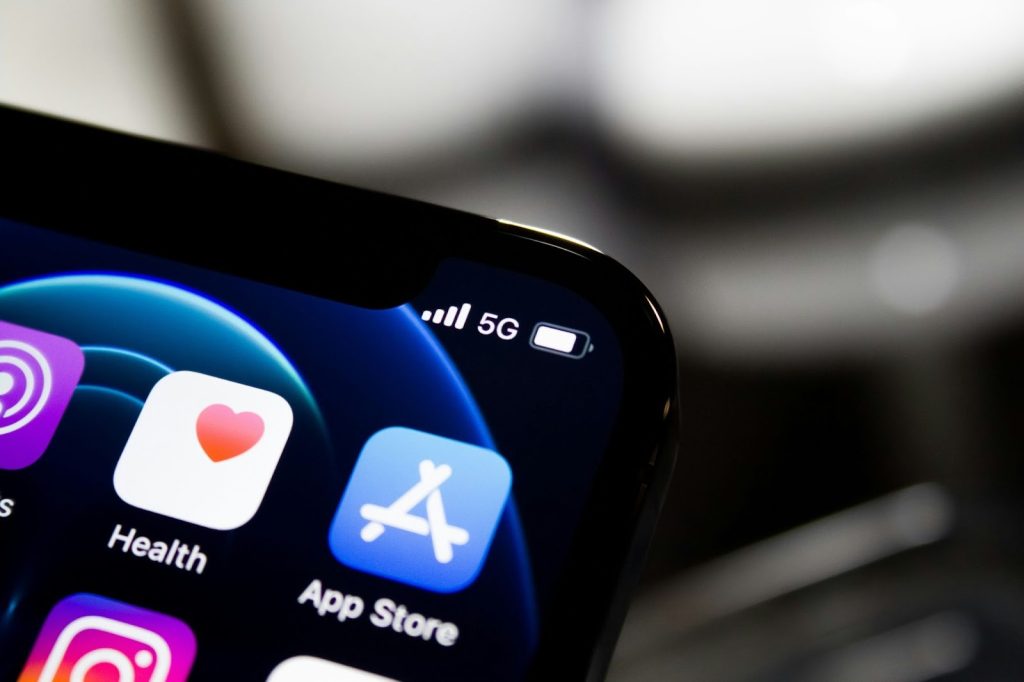
5G is changing how multiplayer games are built and played. The difference goes beyond speed to precision and timing. When the gap between action and response becomes almost invisible, game design itself evolves. Developers who once built around lag can now design for flow and immediacy. In the United States, end-to-end 5G latency averages 20 to 30 milliseconds, depending on carrier and location, roughly half that of 4G. Every tap, trigger, and move now reaches its destination almost as quickly as it happens.
Excerpt of The 5G Advantage: Building Faster, Fairer Multiplayer Worlds
5G isn’t just a buzzword—it’s a real game-changer for multiplayer gaming. Unlike 4G, 5G offers ultra-low latency (as low as 1ms), higher reliability, and significantly faster download and upload speeds. This means players from rural areas can now compete fairly with urban players, and mobile gamers won’t be at a disadvantage against console or PC users. Developers can design large-scale, real-time worlds with better matchmaking and responsiveness, leading to more competitive and inclusive multiplayer ecosystems.
The 5G Edge in Multiplayer Gaming
- Latency reduction to near real-time levels, enhancing player reactions
- Fairer matchmaking as connection disparities between regions narrow
- Mobile gaming boost, enabling console-quality performance anywhere
- Cloud gaming optimization, reducing hardware dependency
- Expanded player base, supporting more users per server with lower lag
Real-Time Play and Player Trust
Instant play builds trust. When people see results as soon as they act, confidence follows. Cloud gaming platforms like GeForce NOW show how fast connections turn streamed titles into responsive worlds. Each action appears instantly because 5G bandwidth and edge computing shorten the distance between user and server, replacing local power with network speed to keep even complex games running smoothly.
That same responsiveness drives live competitive formats. Twitch Rivals events show how low latency turns interaction into shared performance, where players, viewers, and commentators experience the same moments in near real time. The sense of immediacy keeps engagement high because timing and reaction merge into one continuous loop.
The same timing precision is reshaping other real-time experiences. One of the clearest examples is online casino platforms, where live tables and automated systems depend on verifiable speed to make every roll, spin, or draw visible in real time — a test of both timing and transparency. The Adventure Gamers craps casino selections show this in another form of live interaction. These platforms rely on synchronized dice rolls, verified fairness, and live-dealer streams to maintain trust. Every roll depends on exact timing mirrored across devices so players see results together. The advantage is engagement built on proof rather than promise. People stay invested because the system responds as quickly as they do, showing how latency shapes belief as much as performance.
These examples reveal what low-latency design can achieve and set the stage for understanding how 5G changes the technical baseline.
The New Baseline for Latency
In multiplayer design, latency and jitter define how real real-time feels. On 4G networks, higher delay often forced developers to predict movement or smooth over lag to keep sessions stable. The difference with 5G is immediate. Latency drops to about half the level seen on 4G, and jitter becomes far less noticeable. Consistency matters just as much. Lower jitter means steadier timing, allowing smaller input buffers and smoother frame synchronization without the need for heavy correction.
Reduced delay also means fewer workarounds. Instead of compensating for network weakness, teams can design for accuracy. Predictive systems still matter, but no longer carry the burden of hiding slow responses. Gameplay feels balanced between devices, even when players connect from different regions. While network slicing promises dedicated low-latency lanes, access to this feature still depends on full Standalone 5G rollouts. Latency can vary across cities and networks, yet the consistent drop in delay and jitter defines the real advance.
Edge Computing and the Infrastructure Shift
The technology behind this leap goes beyond radio speed. 5G relies on a distributed architecture that moves computation closer to players through Multi-Access Edge Computing. Local edge servers handle data within the same region, reducing distance and response time. Network slicing adds another layer of control by giving certain traffic, such as multiplayer synchronization or cloud rendering, a stable and predictable route even when networks are busy.
This setup is still growing, managed mostly by operators and cloud providers, and it can add short-term cost and complexity for developers. Yet the long-term value is clear. It shifts design thinking from whether the network can handle real-time play to how it can expand what players experience together. Developers can now treat the network as part of the device rather than a barrier between them.
Designing for the 5G Era
As latency falls, developers can raise server tick rates, reduce input buffers, and rely less on rollback or heavy prediction. Games can handle micro-interactions, those short, high-frequency exchanges that make teamwork and competition feel immediate. Artificial intelligence is also changing the way we play games and adapting to how players move and respond in faster environments. Cross-platform parity also improves. With 5G, mobile players can join the same real-time sessions as console or PC users without falling behind due to connection lag.
Lower latency also opens new space for real-time collaboration beyond gaming. Shared creation tools, live events, and interactive broadcasts can now run on the same low-latency backbone. As networks grow faster and more stable, content itself becomes the interface. Spectators turn into participants as interaction becomes the focus of design.
Remaining Constraints
Despite these advances, no system is flawless. Real-world latency can still reach 50 milliseconds during congestion or in areas with limited 5G coverage. Not all 5G connections deliver the same results. Low-band coverage focuses on reach rather than speed, offering only modest gains over 4G. Mid-band, especially C-band in the US, delivers the best balance of range and responsiveness, while high-band mmWave offers the fastest performance but limited coverage in dense urban zones.
Infrastructure beyond the access network still matters. A server hosted across continents will always add delay. Developers must continue to plan for spikes, fallback states, and adaptive quality settings. Even so, today’s baseline is far ahead of the past. The slowest 5G connection often performs like the fastest 4G did just a few years ago, and that reliability is what makes continuous real-time design sustainable.
The Turning Point
5G marks a measurable shift rather than a marketing milestone. For developers, its value lies in reliability and consistency, not just speed. Lower latency and closer processing make real-time systems behave more predictably, which changes how games and shared experiences can be designed. The tools are still evolving, and coverage gaps remain, but the foundation for responsive, network-driven design is now in place. What was once an engineering workaround is becoming standard practice.



 The Quiet Rise Of Minimalist Branding: Why Less Really Is More